Handwriting Examination
Scientific Analysis of Handwriting Characteristics in a Forensic Laboratory, with a Private Expert Opinion

Handwriting Authorship Determination and Characteristics Analysis
Handwriting is an individual, "biometric" trace produced by the brain and the muscular system working together. Just like a fingerprint, each person’s handwriting characteristics (pen pressure, letter slant, starting and ending points) are unique. In our laboratory, we establish by scientific methods who wrote a questioned piece of handwriting.
Unconscious Movements: Even when writers try to disguise their handwriting, unconscious writing habits and incidental features, which cannot be fully suppressed, reveal the identity of the true writer.
- Authorship Determination Establishing which of the suspected persons wrote the handwriting.
- Alteration Analysis Detection of additions or changes made to the writing at a later stage.
- Pressure and Indentation Marks Three-dimensional analysis of the depth of pen pressure (indentation) on the paper.
Why Work With Us?
If you need an experienced, qualified forensic document examiner in Turkey, you are in the right place.
- Have you been the victim of forgery or fraud in Turkey?
- Do you believe someone forged your signature?
- Has a promissory note, cheque, contract or other document been forged in your name?
- Do you doubt whether a signature on a document you received is genuine?
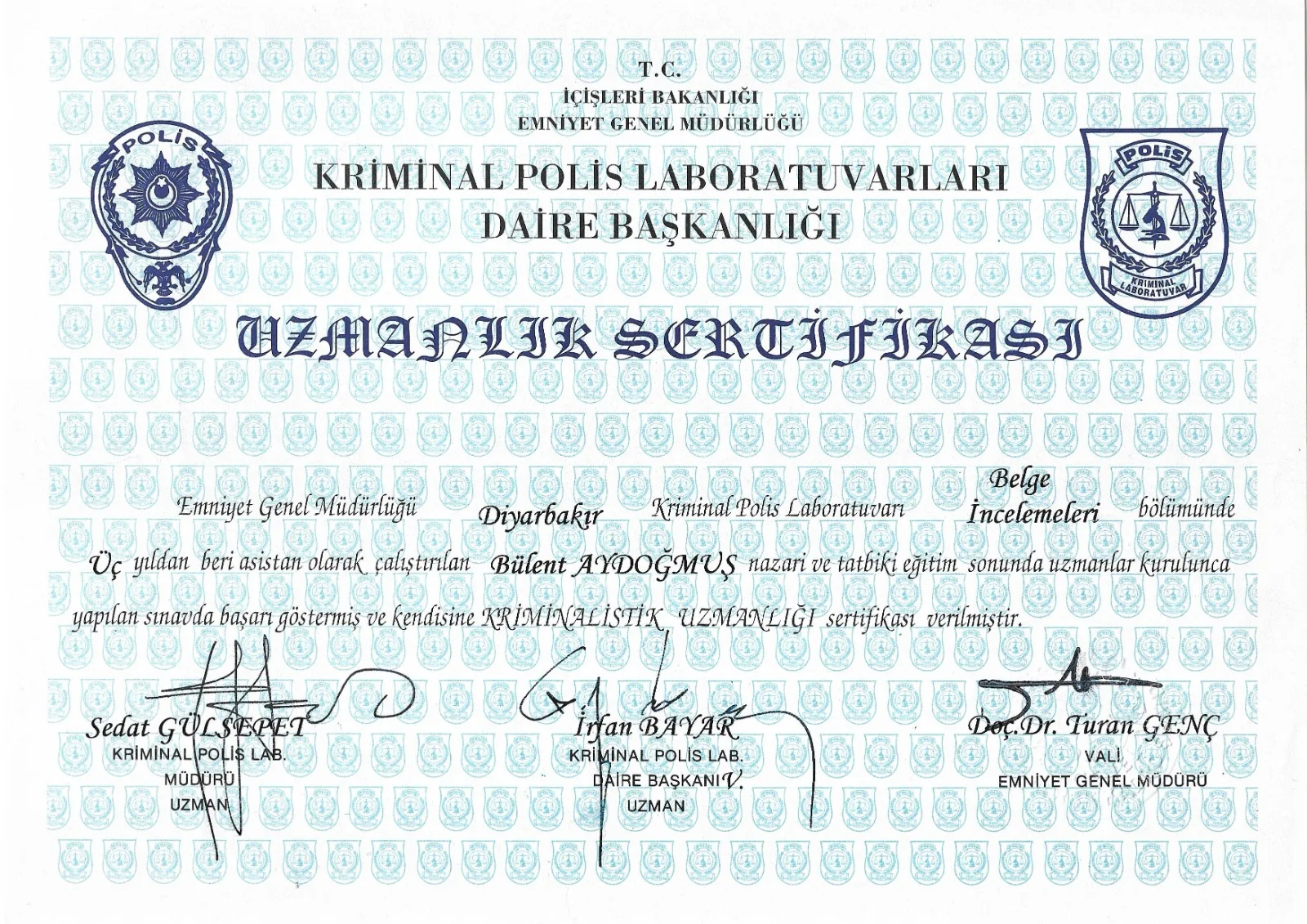
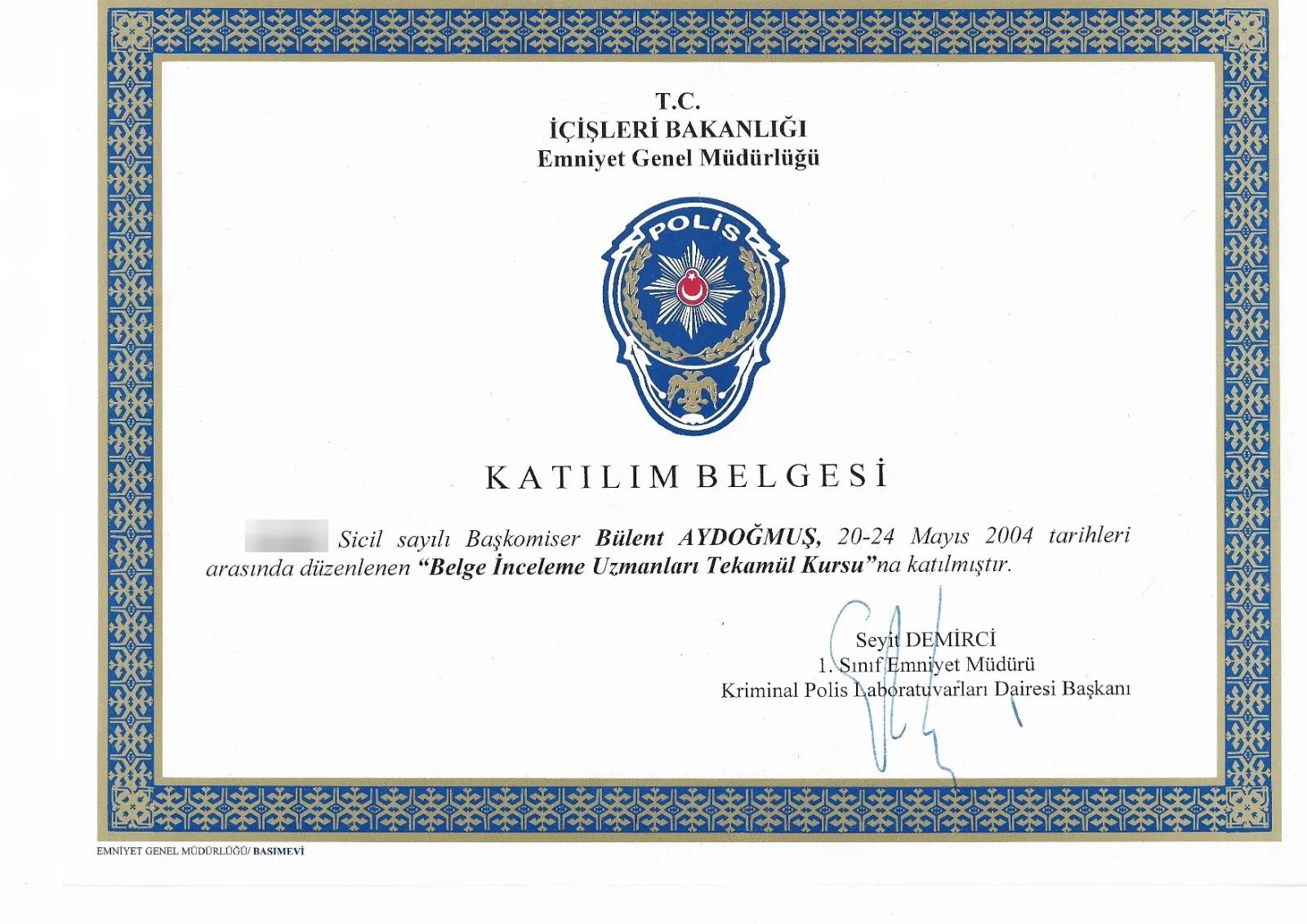
I have been working on forgery and fraud cases since 1995. With 30 years of experience and specialised equipment, I am ready to help you.
Legal Framework and Reference Sources for Handwriting Examination
Handwriting authorship determination is one of the core scientific methods of proof that Turkish courts rely on in criminal cases, inheritance disputes, commercial disputes and employment law proceedings. The legal provisions and institutional sources below form the legal basis of handwriting examination in Türkiye.
-
Turkish Criminal Code (TCK) Article 207 — Forgery of Private Documents
Forgery of handwritten private documents carries a prison sentence of 1–3 years for the person who writes the document falsely or alters it.
Read the Statute -
Turkish Criminal Code (TCK) Article 204 — Forgery of Official Documents
Forgery committed on handwritten official documents carries a prison sentence of 2–5 years; where the offence is committed by a public official, the sentence is 3–8 years.
Read the Statute -
Code of Civil Procedure (HMK) Article 293 — Private Expert Opinion
The parties may obtain a scientific opinion from an expert on the matter in dispute (HMK 293(1)). The judge may, on request or of their own motion, decide to hear the expert who prepared the report (HMK 293(2)).
Read the HMK -
Code of Civil Procedure (HMK) Article 208 — Denial of Handwriting or Signature
A party who wishes to deny the handwriting or signature on a document allegedly drawn up by them must allege forgery; otherwise the document is used as evidence against them. Forgery may be raised as a preliminary issue before the same court or in a separate action.
Read the HMK -
Turkish National Police — Criminal Laboratories
The Criminal Police Laboratories Department of the Turkish National Police carries out handwriting authorship examinations in an official capacity.
Visit the Police Source -
SWGDOC — International Standards
The Scientific Working Group for Forensic Document Examination is the reference body that sets internationally recognised methodology standards for handwriting examination.
Review International Standards