Signature Examination
Scientific Detection of Forged, Simulated and Cut-and-Paste Signatures, with a Private Forensic Expert Opinion

Signature Examination and Authorship Determination
Signature examination is carried out on disputed signatures on documents such as promissory notes (senet), cheques and contracts. It first establishes whether a signature is forged, then identifies the forgery method and, ultimately, who actually wrote the signature. The disputed signatures are compared, using optical instruments and devices and established signature comparison and graphometric methods, with reference signatures of the purported signatory and of any suspects taken in the presence of the court, and with genuine (contemporaneous) reference signatures found on documents drawn up close to the date of the disputed document.
Comparison Criteria: For a sound examination, assessing both reference signatures "taken in the presence of the court" (recent) and "genuine" samples dating from around the time of the event (older) together is vital for the certainty of the authorship finding.
- Forgery Method Analysis Detection of tracing, copying or freehand simulation methods.
- Graphometric Measurement Analysis of signature speed, slant, letter spacing and starting/ending points.
- Optical Instrument Examination Microscopic inspection of ink distribution and pen pressure (indentation) marks.
Why Work With Us?
If you need an experienced, qualified forensic document examiner in Turkey, you are in the right place.
- Have you been the victim of forgery or fraud in Turkey?
- Do you believe someone forged your signature?
- Has a promissory note, cheque, contract or other document been forged in your name?
- Do you doubt whether a signature on a document you received is genuine?
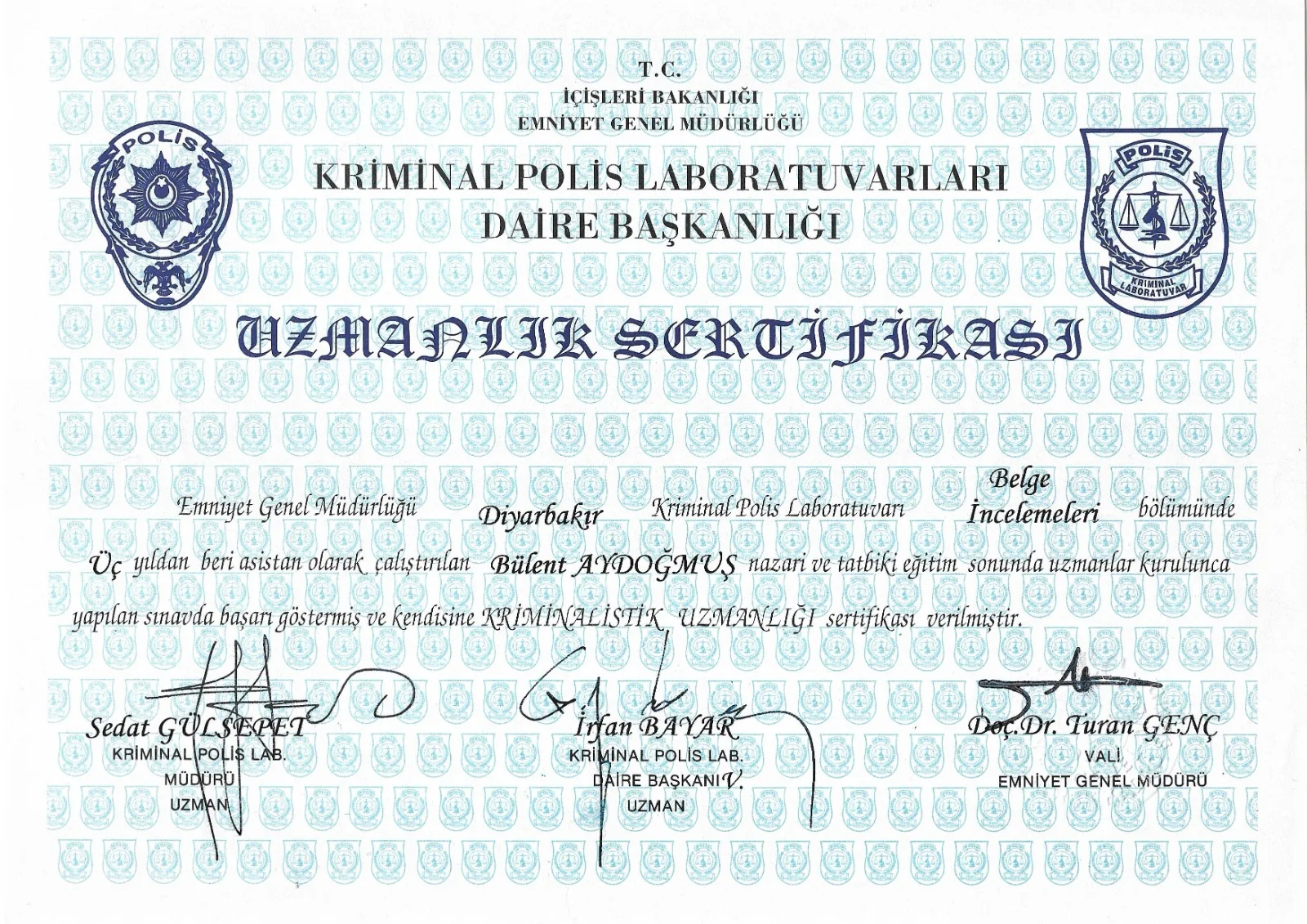
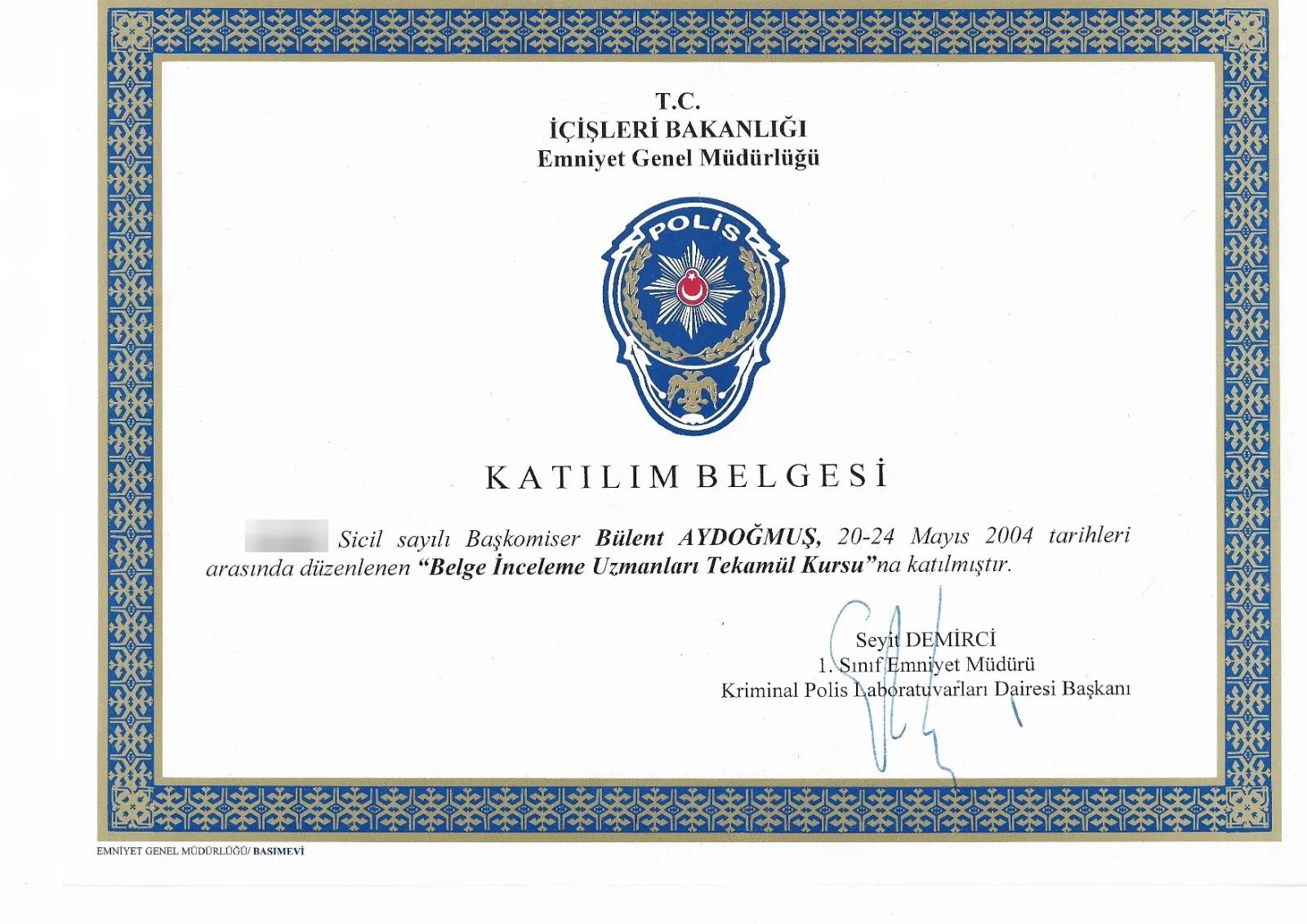
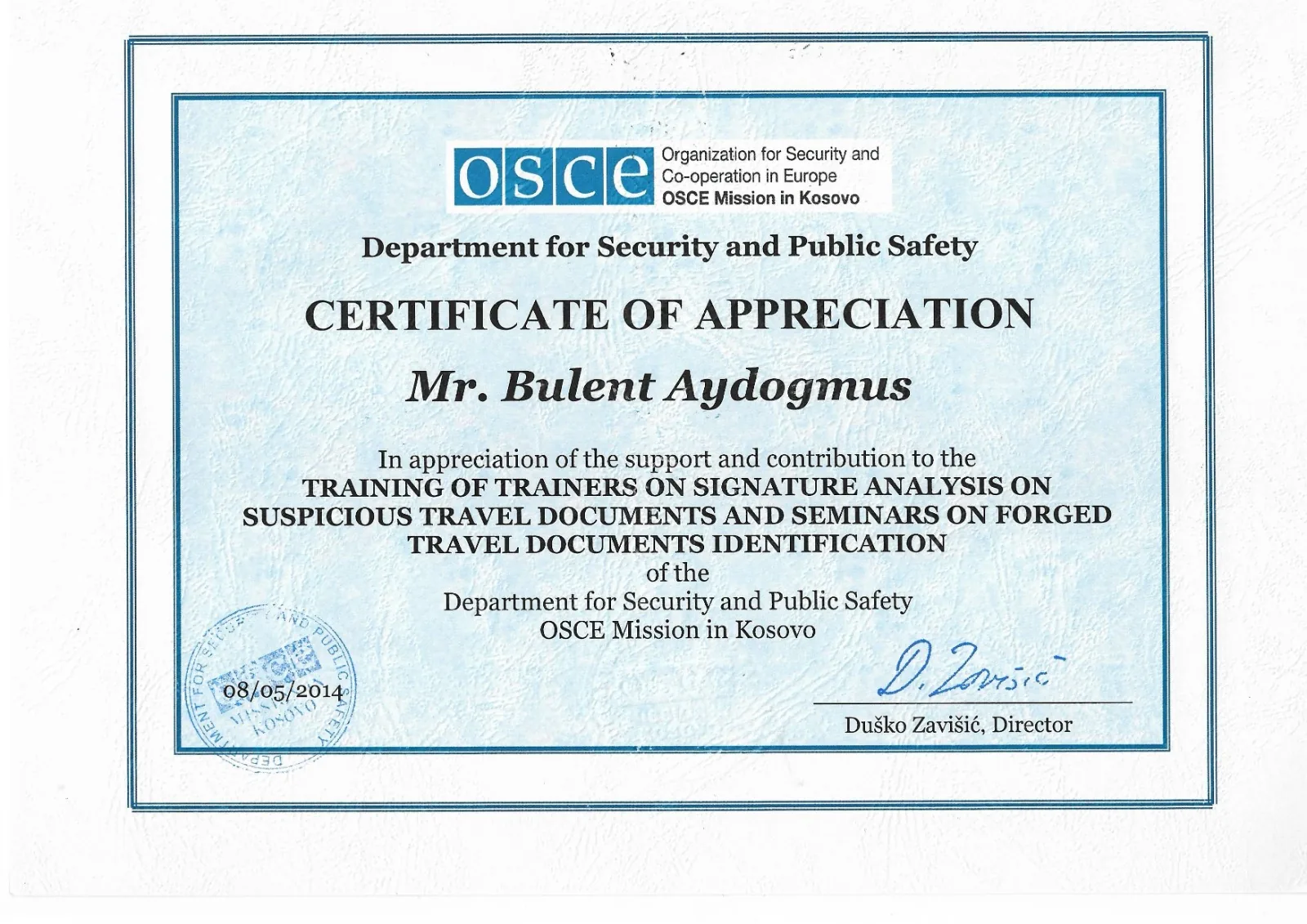
I have been working on forgery and fraud cases since 1995. With 30 years of experience and specialised equipment, I am ready to help you.
Legal Framework and Reference Sources for Signature Examination
Signature authorship determination is one of the core scientific methods of proof that Turkish courts rely on in disputes over promissory notes, cheques and contracts, in enforcement proceedings, in inheritance cases and in criminal trials. The legal provisions and institutional sources below form the legal basis of signature examination in Türkiye.
-
Turkish Criminal Code (TCK) Article 207 — Forgery of Private Documents
Forgery of private documents such as promissory notes and contracts drawn up with a forged signature carries a prison sentence of 1–3 years for the person who forges and uses the document.
Read the Statute -
Turkish Criminal Code (TCK) Article 204 — Forgery of Official Documents
Where a forged signature is used on an official document, a prison sentence of 2–5 years applies; where the offence is committed by a public official, the sentence is 3–8 years.
Read the Statute -
Code of Civil Procedure (HMK) Article 293 — Expert Opinion
The parties may obtain a scientific opinion from an expert on the matter in dispute (HMK 293(1)). The judge may, on request or of their own motion, decide to hear the expert who prepared the report (HMK 293(2)).
Read the HMK -
Code of Civil Procedure (HMK) Article 211 — Forgery Examination
If the judge, after questioning the party who denies the signature and having them write and sign in court, still cannot reach a conclusion, an expert examination is ordered. It is based on that party’s comparable handwriting and signatures obtained from the relevant records and on those taken in court.
Read the HMK -
Turkish National Police — Criminal Laboratories
The Criminal Police Laboratories Department of the Turkish National Police carries out signature authorship examinations in an official capacity.
Visit the Police Source -
SWGDOC — International Standards
The Scientific Working Group for Forensic Document Examination is the reference body that sets internationally recognised methodology standards for signature and handwriting examination.
Review International Standards