Every Contact Leaves a Trace!
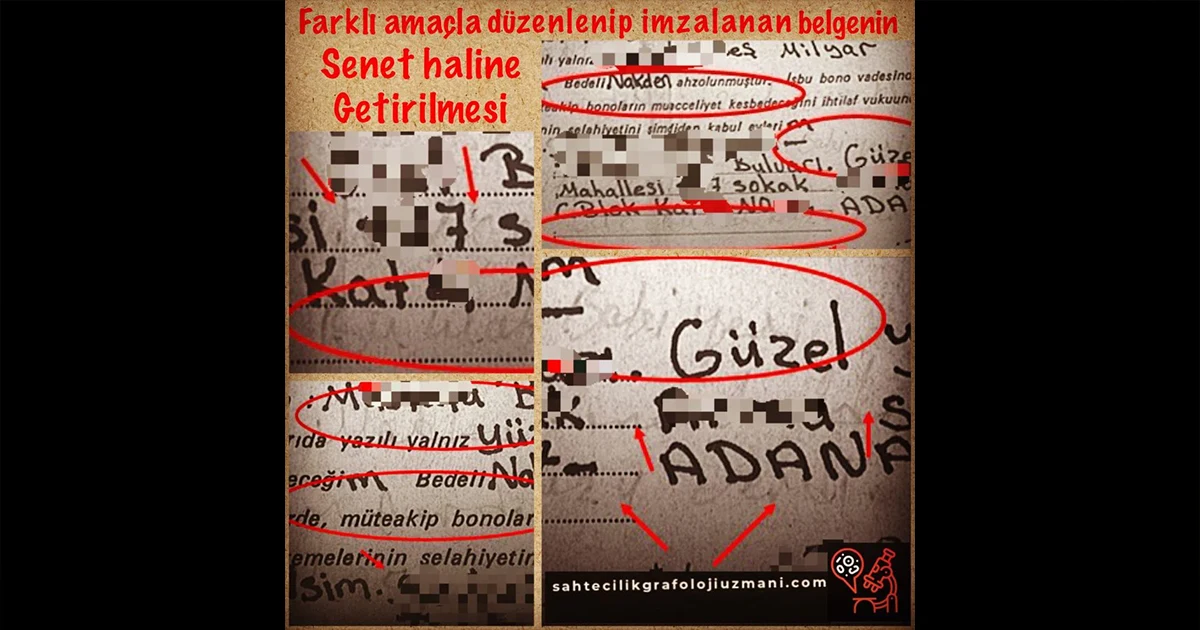
Turning a Document into a Promissory Note
Document alteration is a deliberate manipulation of a document, carried out to serve a particular purpose, and it has serious consequences in any legal system. It usually takes the form of changing a document with false information, filling in blank fields or concealing certain details. Because altered documents often influence important legal or financial decisions, the emergence of such offences causes considerable concern in society.
Forgery is a broad concept and is directly linked to the use of altered documents. Changing a document so as to distort its true nature and value can target not only individuals but also organisations and states. Such acts are subject to serious sanctions under the law. Offenders plan carefully in order to gain various advantages by altering documents, and this inevitably has a negative impact on society.
Another important aspect of document alteration is that such manipulation frequently becomes more sophisticated as technology advances. Forgery of signatures and documents in the digital environment adds a dimension that differs from physical documents. In today’s digitalised world, documents can be changed quickly, which makes forged documents harder to detect. Developing robust safeguards and training to prevent this is therefore of great importance.
How a Document Drawn Up for Another Purpose Is Altered into a Promissory Note
Description of the Case
The applicant, who had not taken on any financial obligation, questions the legal nature of the situation created through a document that had been drawn up. The existing documents were altered for the purpose of proving or denying the alleged debt and turned into a promissory note (senet). The motives behind this process and the way the events unfolded contain elements that must be assessed carefully from a legal perspective.
In particular, the applicant’s statements that he never incurred the debt clarify the scope of the altered document and affect the course of the case. To prove this, the applicant explains in detail the events since the date the documents were drawn up and the content of the documents, setting out the difficulties encountered and his legal rights of objection. The document that was altered into a promissory note not only creates a financial obligation for the applicant but also has the potential to give rise to legal liability.
The significance of the case is not limited to the applicant’s individual situation; it also matters because of its wider legal consequences. If the court establishes that the documents were altered and that the applicant never incurred the debt, this may serve as a precedent for others facing similar situations. For this reason, careful assessment of the evidence and a meticulous legal process are vital in such cases if justice is to be done.
Examination of the Promissory Note
A promissory note plays an important role as a financial and legal instrument. Once the note has been submitted to the examiner, the examination yields a series of critical findings. First, it must be determined whether the signature and the handwritten name and surname on the note belong to the applicant. At this point, authentication of the signature by qualified experts is of great importance in establishing whether the note is a valid document.
Various methods can be used to verify a signature. The most common include comparison with signature samples and, where necessary, forensic handwriting examination. The handwritten name and surname must also be examined properly, as this provides information about who drew up the note and for what purpose.
The importance of the other details on the note cannot be overlooked either. Elements such as the dates, amounts and details of the parties must be taken into account when assessing the document as a whole. Each element plays a critical role in determining the legal framework of the note. For example, the date may affect the note’s period of validity and conditions, while the amount clarifies the debt or receivable.
The data obtained from these examinations provide important reference points in both legal proceedings and financial transactions. Especially where altered documents are encountered, carrying out these examinations meticulously is essential to prevent any loss of rights.
⚠️ How Can an Innocent Signature Become a Debt?
An eviction undertaking (tahliye taahhütnamesi), a delivery receipt or simply a signature on a blank sheet of paper… Malicious people can fill the space above your signature with “promissory note wording” and make you liable for a debt you never incurred. In Turkish legal practice this is known as “signing in blank” or “creating a promissory note by alteration”.
Examination Using Chemical Methods
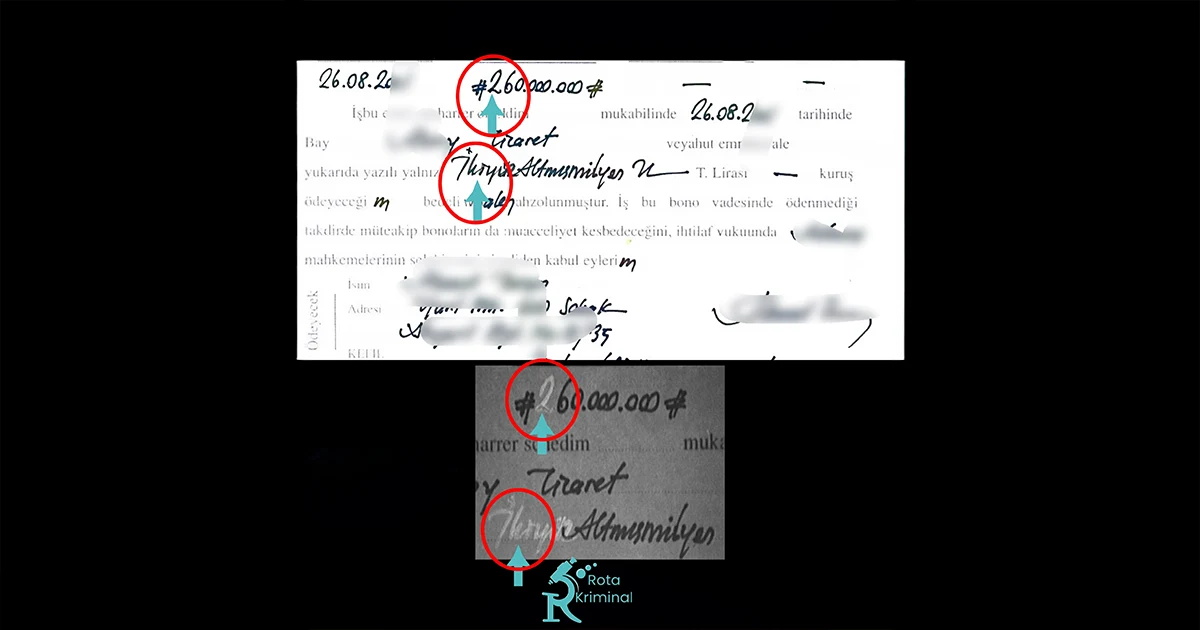
Document alteration is one of the most common techniques in forgery cases. When examining documents that have been altered into promissory notes, detecting traces invisible to the naked eye plays a critical role. In such examinations, detailed analysis of documents using advanced document examination equipment is an effective way of exposing attempted forgery.
First of all, one of the techniques used in the examination process is known as ink analysis . Different types of ink may display different chemical properties because of their components. In particular, the composition of the inks used in forged documents often does not match that of the inks used in the original documents. These inconsistencies provide important clues in detecting forged documents.
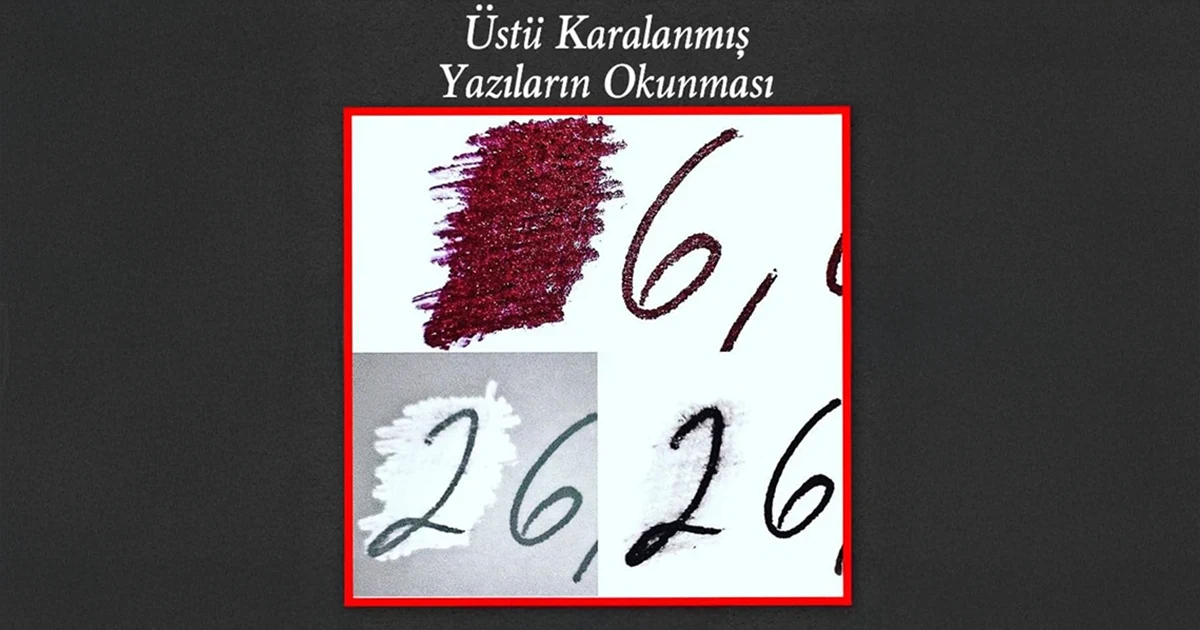
In addition, analysing so-called ‘document stains’, i.e. the chemical removal of existing writing over which new writing has been added, is of critical importance. This process is generally supported by examination under UV light. UV light reveals the different components of the ink and the paper and helps detect attempted forgery. In such examinations, differences on the surface of the document can also be observed using various acid and alkaline solutions.
In conclusion, examining documents with document examination equipment is not only an important step in forgery cases but also helps to preserve the integrity of documents. These methods play an effective role in detecting altered documents, both in forensic science and in document examination generally.
🔬 Ink Differences and Stroke Sequence
Did you sign a blank sheet of paper years ago, and was the promissory note text written above it later? There is no valid method that determines the year in which ink was applied as a date; however, the spectral ink analysis carried out in our laboratory reveals differences in ink and chemical composition between the signature and the text, the order of writing at line intersections and the position of the text relative to the signature. These findings are the scientific basis for assessing whether the document was filled in afterwards.
Outcomes of the Process
Altering a document drawn up for another purpose into a promissory note has serious legal and ethical consequences. One of the most fundamental findings in this process is that, although the name and signature on the document belong to the applicant, there are elements proving that the promissory note is forged. The act of creating a forged document forms the basis of charges before the competent courts and puts particular pressure on those involved. Forgery is a significant issue because it undermines public trust, disrupts relationships between individuals and gives rise to legal liability.
Furthermore, the legal consequences of altering a document into a promissory note are very serious. The offence of forging a document is defined in the Turkish Criminal Code (TCK) and can result in severe criminal penalties. In such a case, a person may face not only charges of altering the document but also fraud and, indirectly, other charges. From an ethical perspective, such an act calls the trustworthiness of individuals into question and creates a negative impression in society.
How the promissory note was created is another important point. Forged promissory notes are usually created through misuse of a declaration and registration scheme or by manipulating existing documents. In most cases there is no recorded transaction behind these documents. Consequently, when forged promissory notes are discovered, the related land registry, enforcement (icra) and debtor proceedings are halted immediately, and this leaves the person facing serious consequences. In short, the outcomes of the process have a profound effect not only on individuals but also on society’s general trust and ethical values.
The Role of Handwriting Examination Expertise
Forensic handwriting examination is a discipline that obtains information about the characteristic features of writing through the examination and analysis of written documents. Our firm’s consultant, Forensic Document Examiner Bülent Aydoğmuş, who specialises in this field, plays an important role in cases where documents drawn up for other purposes are altered and then turned into promissory notes. Aydoğmuş’s expertise focuses on assessing the reliability of documents by examining the letterforms, form and style of the writing they contain.
In resolving cases, Bülent Aydoğmuş carries out detailed analyses of how the written documents were produced, the type of writing, calligraphic features and all graphic elements. In this process, any change or alteration in the documents is identified by the examiner, so that firm data on the authenticity of the document can be obtained. Through such analyses, Aydoğmuş provides important findings aimed at identifying the writer of the document, clarifying the purpose for which it was made and resolving the legal issues that arise.
Forensic Document Examiner: Bülent AYDOĞMUŞ
Handwriting and Forgery Examiner“Every contact leaves a trace. If a document has later been altered and turned into a promissory note, a microscopic piece of evidence will always remain in the paper fibres and at the ink intersections (crossing lines). Our job is to find that evidence and present it to the court.”
Bülent Aydoğmuş’s expertise in handwriting examination is not limited to examining existing documents; it is also relevant when new documents are being created. Handwriting and signature examinations increase the reliability of documents and play an effective role in preventing fraud and forgery. In this respect, Aydoğmuş’s contributions are of great importance in ensuring the social and legal reliability of written documents. Indeed, document examiners who work on the principle that every contact leaves a trace take document examination a step further and help justice to be done.
Methods for Preventing Forgery
Preventing forgery is vital to ensuring the reliability of documents. In this context, document verification procedures must be applied meticulously. First, it is essential to compare the information on the document with the original documents. One of the most important steps users should take is to check the validity of documents through reliable sources that verify their accuracy. Verification via electronic systems is an effective method against forgery.
Another method that can be used to combat document alteration is security features and special printing techniques. These methods increase the reliability of documents and prevent forgery. In addition, the use of security elements (for example, UV printing and holograms) provides traceability on the document. Integrating such security measures when a document is created or reproduced makes forgery harder.
Protection of personal data is also a critical point in preventing forgery. Taking user authentication processes into account is necessary, particularly for digital documents. User authentication systems ensure that every change and interaction on the document is recorded. In this context, training and awareness campaigns are also extremely important. Raising awareness of how documents should be protected and how to deal with forgery will make it easier to take adequate precautions.
In conclusion, there are several methods and strategies for preventing forgery. Following document verification steps, using secure printing techniques and applying data protection consciously offer effective solutions for minimising forgery. Every step taken in these areas helps to build a solid umbrella of protection.
Visual Evidence and Reporting
Visual evidence plays a critical role in gathering information about a case and reporting that information effectively. Images obtained during case work allow the event or situation to be fully understood and also make the relevant data easier to interpret.
Gathering images relating to a case requires a systematic approach. First, photographs or videos should be taken from appropriate angles during observation. The most important consideration at this stage is that the images obtained are clear and informative. The number and variety of images are among the factors that increase the effectiveness of the report. For example, gathering images that show the beginning, development and final stages of the event helps the situation to be better understood.
Organising the images gathered is another important aspect of reporting. Arranging the images in a suitable order and supporting them with explanations allows the reader to grasp the situation more quickly. In the reporting process, it should also be clearly stated how the visual material relates to the content. Each image may provide critical information about the event, so it is recommended to add a short explanation for every image included in the report.
In conclusion, visual evidence is of great importance in resolving a case. Such material makes possible not only the communication of information but also its in-depth analysis. Establishing a sound reporting process with appropriate visual arrangements will improve the quality of case examinations.
🛡️ How Can You Protect Yourself?
- ✔ Leave No Gaps: Sign immediately at the end of the text so that nothing can be added in between.
- ✔ Draw Lines: Close off any blank space between the text and the signature with a “Z” or straight lines.
- ✔ Ask for a Copy: Take a photocopy or photograph of every document you sign at that very moment.
Conclusion and Assessment
The legal consequences of altered documents are a significant issue that can deeply affect a society. Because such documents involve the distortion of real information and data, they can have serious consequences for both individuals and institutions. Legal systems contain various provisions on the invalidity of documents altered into promissory notes. However, gaps in practice make it difficult to prevent such fraud. In particular, the loss of trust caused by the use of these documents can adversely affect people’s social relationships.
People’s sense of trust in society should remain consistent, at least to a certain degree. Altered documents shake this sense of trust and can even affect the way people reach decisions. This applies not only to individuals but to the entire social structure and its institutions. A weakening of trust can significantly undermine people’s willingness to do business together, to cooperate and to carry out projects.
In this context, an increase in the prevalence of alteration cases can lead to rifts in the social fabric and even to social unrest. The consequences of altered documents go beyond being merely a legal matter and have a profound effect on human relationships. In conclusion, work is needed to increase public awareness and legal safeguards in order to deal with such problems. This article highlights the threats posed by altered documents and the need for greater awareness of this issue.