Forgery Carried Out on Documents and the Examination Process
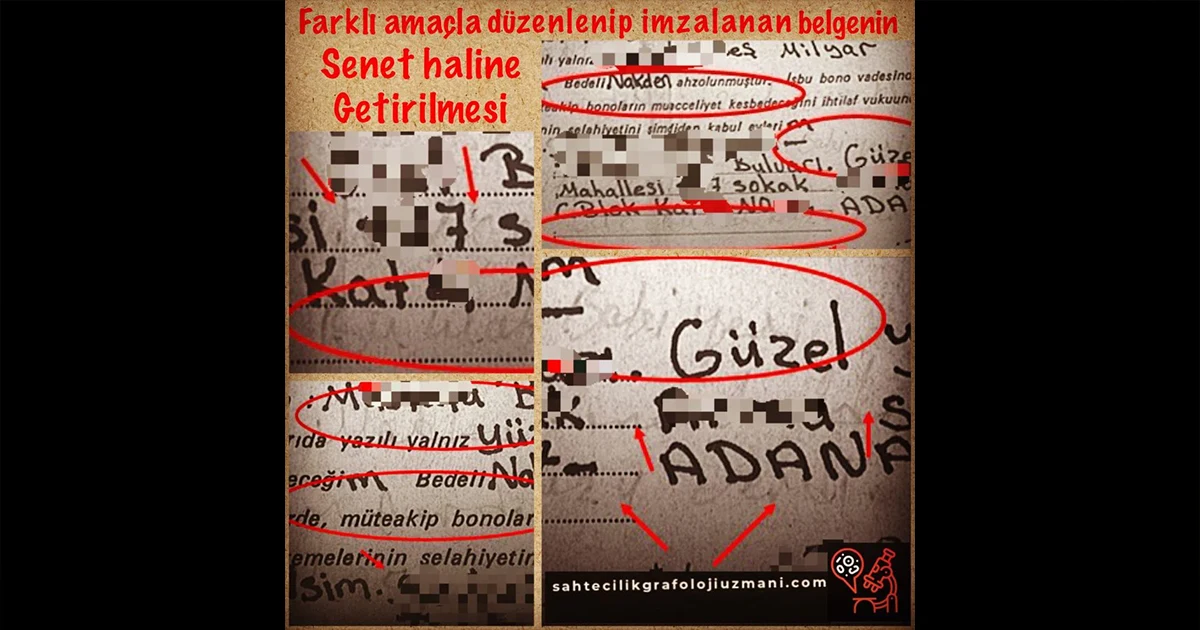
A promissory note (senet) is a legally valid document recording a debt or claim between parties. However, alteration of promissory notes is a common problem among forgery cases. Alteration means the unauthorised modification of a document’s content, and such acts fall within the scope of forgery. Alteration of promissory notes is usually carried out by methods such as erasure, addition and modification.
Erasure is the removal of specific information from a document, such as an amount or a date. This can seriously corrupt the original content of the document and lead to disputes between the parties. Addition is the insertion into an existing document of information that was not there before. For example, adding a higher amount to a promissory note can have consequences to the detriment of the debtor. Finally, modification is the unauthorised changing of existing information in the document. Interventions of this kind threaten the reliability and validity of the note.
In such situations, the likelihood of the parties suffering harm is very high. Disputes arising from alteration can turn into legal proceedings, which means financial loss and lost time for the parties. To prevent alteration of promissory notes, documents must be carefully examined and verified. In this context, preserving the originality of documents and ensuring a careful examination process play an important role in preventing forgery.
🔍 The 3 Most Common Forgery Methods
Differences Between Promissory Notes, Cheques and Contracts
Promissory notes, cheques and contracts are documents we frequently encounter in commercial and legal transactions. Each has a specific purpose and legal nature. First of all, a promissory note is an instrument that records claims and debts in writing. Such documents are generally used when one party undertakes to pay a certain sum of money or deliver goods to another. Promissory notes are usually signed by the debtor and create a legal obligation.
A cheque, on the other hand, is an instruction to be paid through a bank. In other words, a cheque is a document a person gives to their bank so that a certain amount is paid to the person or organisation named on it. Cheques are one of the methods of transferring funds most often used in commercial transactions and are generally regarded as a more reliable means of payment. However, cheques are also exposed to the risk of forgery; their validity and security should therefore be examined carefully.
A contract is used to put an agreement between parties fully into writing. Contracts set out the rights and obligations of the parties under specific terms and conditions. These documents are generally required for various business agreements such as sales, service provision or leasing. Although contracts have a more complex structure, they provide legal protection between the parties.
The assessment of these three documents in terms of forgery varies according to the nature of each. Promissory notes in particular are among the documents most likely to be altered because of the legal obligations they carry. Cheques, although advantageous in speeding up cash flow, should be used with care because of the risk of forgery. Contracts, being generally more comprehensive and detailed, may offer a safer route in terms of protection against alteration. Each of these documents therefore plays a different role in legal proceedings.
🔬 The Eye Can Be Deceived, Wavelengths Cannot
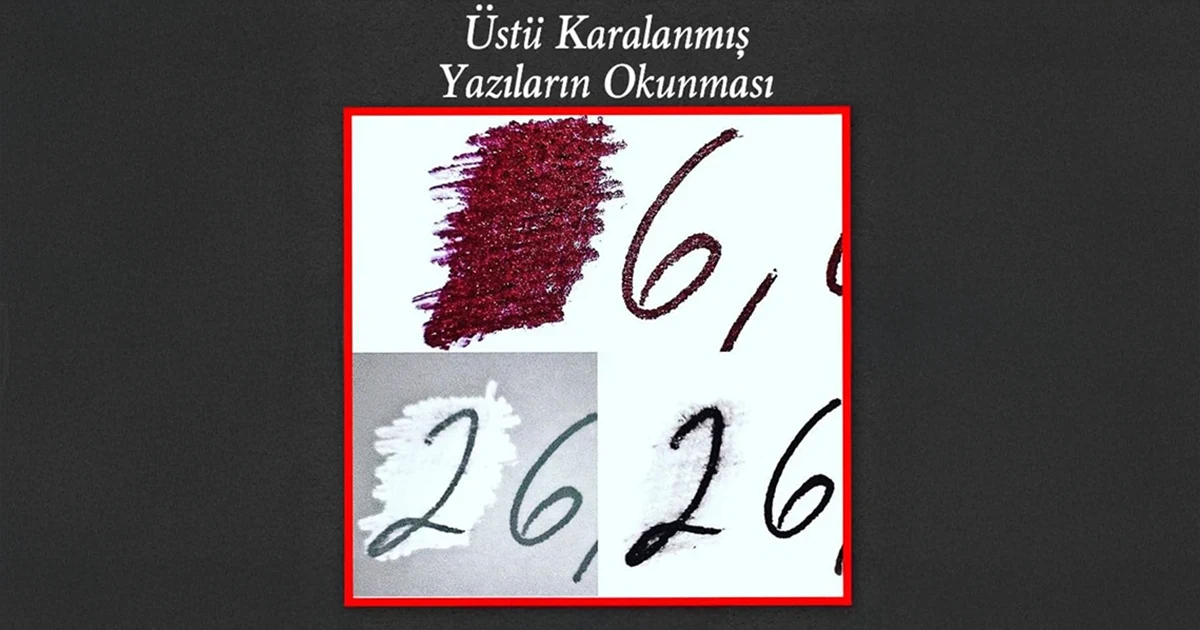
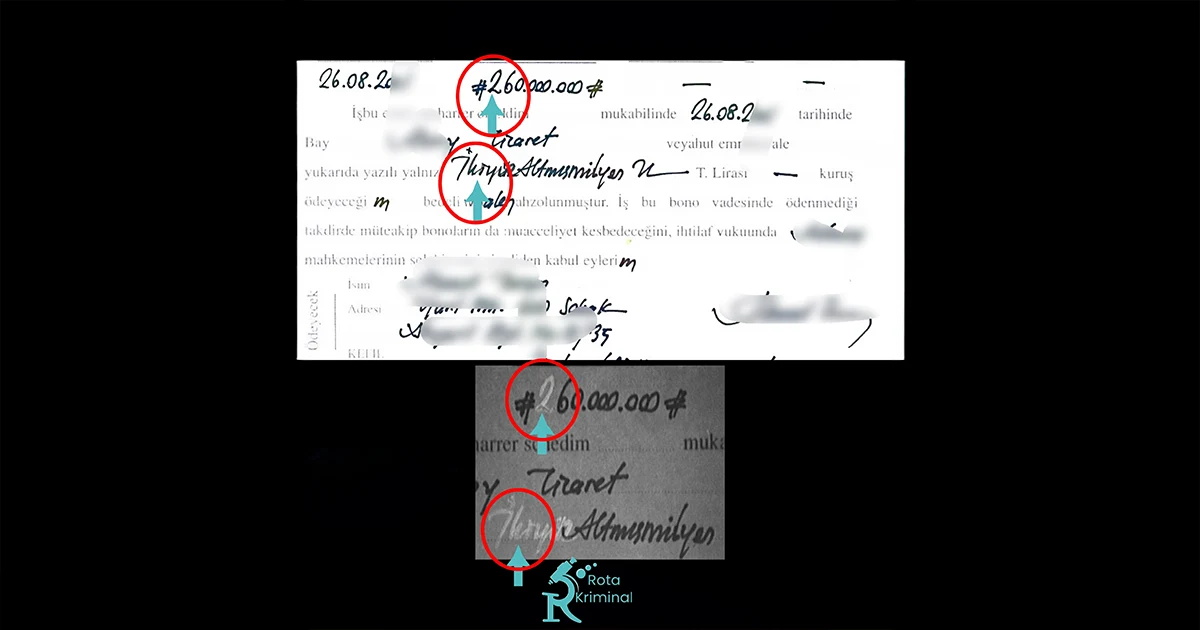
A “0” added to a promissory note afterwards may look the same colour to the naked eye. In the Video Spectral Comparator (VSC) in our laboratory, however, the inks of different pens glow in different colours under infrared (IR) light. Alteration cannot hide in the light of science.
The Role of Experts in Detecting Forgery
Detecting forgery is a critical process, particularly for ensuring the security of written documents. In this field, experts use various methods and techniques to prevent and detect forgery. Handwriting examiners and forgery experts play a key role in this process. Their work usually begins with the ability to analyse the details on documents.
The techniques used by experts include texture analysis, ink examination and handwriting and signature analysis. Texture analysis begins with examining the structure and surface properties of the paper. Ink examination is carried out by analysing the chemical components of the inks used. In this process, ink traces on the document may show differences where there has been forgery.
In addition, handwriting and signature analysis involves examining a person’s handwriting and signature style. By catching inconsistencies and differences in writing and signatures, experts obtain important clues for determining whether a document is forged. Such analyses require both knowledge of handwriting examination and extensive experience. The details identified by experts can be extremely effective in establishing forgery.
In conclusion, detecting forgery is made possible by the meticulous work of experts. By applying specific techniques, these experts play an important role in determining whether documents are forged.
SHORT NOTE: WHY ARE PROMISSORY NOTES RISKIER?
Cheques are “official” forms printed by the bank and tracked by serial number. Promissory notes (bono), however, can be bought from a stationery shop and filled in, which makes them the documents most exposed to alteration and forgery attempts. Examinations of promissory notes therefore require much more delicate forensic processes.
The Debtor–Creditor Relationship: The Complaint Process
The debtor–creditor relationship is one of the basic dynamics of financial disputes, and examining this relationship becomes important in cases of altered promissory notes. While a promissory note serves as proof of a debt relationship, it is based on trust between the two parties. When a debtor faces alteration or forgery, they should be informed so that a proper complaint process can be started. This process will both protect the debtor’s rights and take into account the creditor’s rights of defence.
The complaint process usually begins with the debtor applying to the competent authorities. The debtor needs to explain the situation clearly by submitting the promissory note alleged to be forged together with the related documents. In this case, it is important for the debtor to provide evidence supporting their own defence. The type of alteration on the note can also affect how the process unfolds; for example, matters such as the date of issue, the amount or the names of the parties must be handled carefully during the legal examination.
Subsequently, the examination by the competent institution or the court will make the relationship between creditor and debtor clearer. At this stage, the debtor should develop defences not only against the complaint directed at them but also against the creditor’s claims. Throughout the complaint process, the necessary steps must be taken to protect the legal rights of both parties and reach a fair outcome. All these stages are important elements affecting the debtor–creditor relationship and form the basis of possible future legal proceedings.
🛡️ The Golden Rule Against Alteration
When signing a promissory note or contract, make it a habit to place a closing mark (#) at the beginning and end of the parts written in figures and words (e.g. #10.000 TRY#) and not to leave any blank spaces. This simple precaution prevents “addition”-type forgery later on.
Signature Examination: Establishing Authorship
Signature examination is an important process for determining the authenticity of the signatures on a promissory note. It aims to establish whether the debtor’s signature was really made by that person on the date the note was drawn up. Signature analysis goes beyond a purely aesthetic or formal assessment and carries out an in-depth evaluation of the signature’s calligraphic and characteristic features.
Establishing the authorship of a signature generally involves analysing factors such as ink, paper, signature style and habits. By examining the interaction between the surface on which the signature was made and the material it was written on, experts can determine whether there has been forgery. The methods used at this stage include techniques such as microscopic examination, ultrasonic testing and spectral analysis.
During signature analysis, comparisons are usually made with signatures on authentic documents, including signatures taken in the presence of the court and genuine (contemporaneous) signatures on previously drawn-up documents. Past signature samples form a broad database for comparing genuine and forged signatures. In establishing the authorship of a signature, parameters such as the signature’s basic features, writing speed, pressure, slant and direction, inclination, alignment, rhythm, rhythm/form balance, starting and ending features, calligraphic and characteristic features and habitual elements come to the fore. A very careful approach is also required in this process from the perspective of criminal law and commercial law.
In conclusion, signature examination is of critical importance in combating alteration. Using the right methods allows forgery allegations to be assessed fairly while aiming to protect the debtor’s rights. Signature analysis is an essential field of investigation not only for legal proceedings but also for the security of individuals.
Detection with Document Examination Equipment
Advanced document examination equipment plays a critical role in detecting alteration of documents. These devices use a wide range of technological methods to identify forged documents and manipulation within documents. In particular, the use of light at different wavelengths is one of the most important elements of the examination process. Thanks to remote sensing and imaging techniques, changes or signs of forgery in existing documents can be detected more easily.
Light waves interact with a document in different ways. For example, ultraviolet (UV) and infrared (IR) light are used to analyse the types of ink, paper components and other substances in documents. With this technique, the different combinations of ink and paper seen in most forged documents can easily be identified. These types of light also allow the internal structure of documents to be examined in detail, so that differences between the original and a forged document can be seen clearly.
In addition, the use of filters is very effective in detecting alteration. By selecting specific wavelengths, filters allow only the relevant information to be displayed. By focusing on distinctive parts of the document, they make signs of forgery more clearly visible. Document examination equipment has therefore become indispensable in the field of document security. As these technologies develop further, more effective results are expected in detecting forgery and alteration of documents.
The Importance of Handwriting Examination
Handwriting examination plays an important role in establishing whether a document is authentic or forged. The process begins with examining and analysing the handwriting and signatures on the document. Expert handwriting examiners can determine the authenticity of documents by assessing writing style, signature form and even paper quality. With the use of innovative technologies, the accuracy and reliability of these examinations have increased.
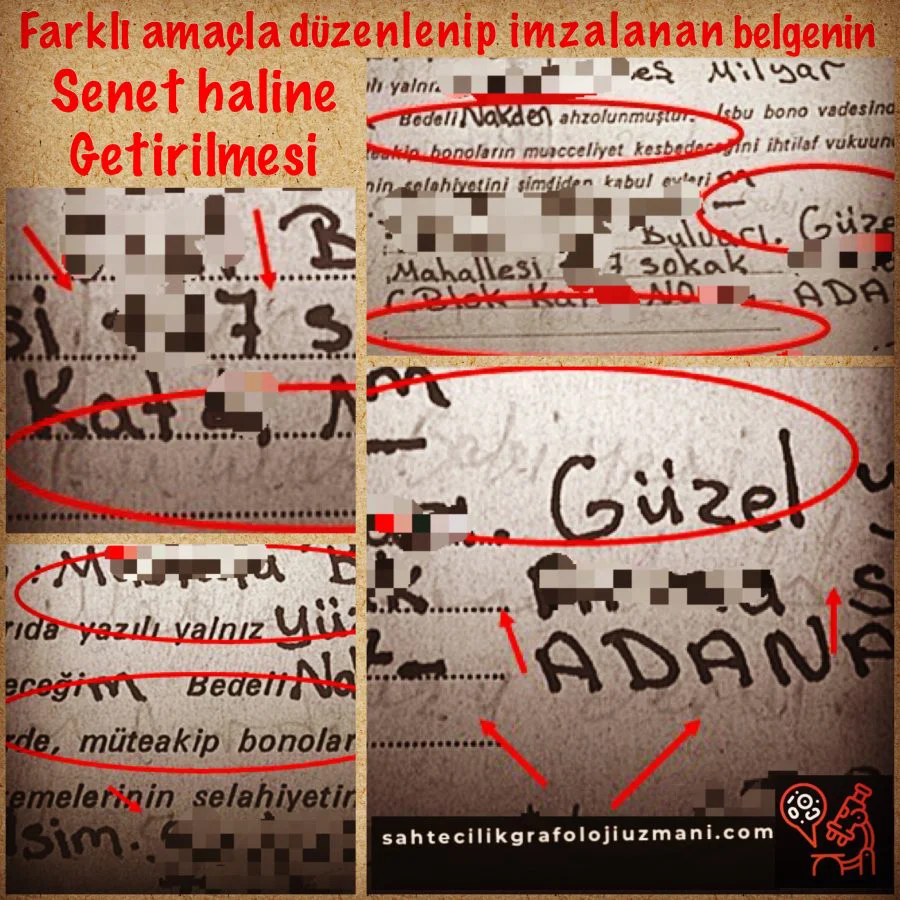
With the spread of problems involving the alteration of promissory notes in particular, the importance of handwriting examination is growing day by day. The findings these analyses provide in detecting forged documents can be of critical importance in courts and legal proceedings. Handwriting examiners obtain data supporting the diagnosis of forgery through software that automatically compares writing characteristics and other scientific methods.
Handwriting examination is not limited to assessing handwriting and signatures; it also covers the physical properties of the document. For example, ink analysis can determine how many pens were used to draw up the document. Such examinations are effective in revealing the multifaceted and complex nature of forgery. Forensic analysis and other tests carried out on documents reinforce the examiners’ findings and form an important resource in detecting forged documents.
In conclusion, handwriting examination stands out as an indispensable method for detecting forged documents. The findings obtained by experts carry great value in legal proceedings and provide important support in combating forgery.
Conclusion: The Consequences of Alteration and the Legal Process
Alteration of promissory notes is an offence that can have serious consequences at both personal and corporate level. The detection of alteration brings many adverse consequences for the person or organisation that drew up the document. First of all, it calls the validity of the documents into question. The validity of an altered promissory note becomes a matter that has to be brought before the competent courts, and this process can lead to significant losses in terms of both time and money.
Among the consequences of alteration, the loss of the document’s validity and the resulting financial losses for the parties are of major importance. When forgery offences are assessed within the framework of their criminal sanctions, imprisonment, a judicial fine or both may be imposed on the person who carried out the alteration. Alteration can therefore bring not only legal risk for the holders of the document but also social consequences such as loss of reputation.
The legal process begins after the alteration has been detected. The first stage is gathering evidence of the alteration. Next, a case must be filed with the competent court. The court process involves an in-depth examination of the effect of the alteration on the documents. If alteration is established, this can lead to the documents being declared invalid and to an outcome in favour of the claimant for compensation of financial damage. In this context, the protection mechanisms provided by the legal system serve to safeguard the rights of the parties.
Methods of Protection Against Alteration
Documents such as promissory notes, cheques and contracts have an important place in commercial and legal processes. However, alteration of these documents can cause serious problems for individuals and businesses. It is therefore very important to consider methods of protection against alteration. First and foremost, the most important factor to bear in mind when preparing and using documents is to obtain services from reliable sources and professionals.
Physical measures such as the quality of paper used in preparing documents, plastic lamination or security strips provide important protection against alteration. In addition, special software and digital signatures used in documents can minimise the risk of forgery. Particularly where documents are stored and shared digitally, the use of strong encryption methods is recommended. This is a critical element in preventing possible data theft.
Furthermore, carrying out regular checks and confirming the accuracy of documents is an important part of protection against alteration. Individuals and businesses can contact official institutions or seek help from independent experts to check the accuracy of the information on their documents. Supporting contracts and promissory notes with documents that include the approval of both parties significantly reduces the likelihood of alteration.
In conclusion, there are various methods to consider for protection against alteration. By applying these measures, both individuals and businesses can increase the security of their documents and protect themselves effectively against possible forgery.