
What Is a Forged Eviction Undertaking? How Can It Be Detected, and What Should You Watch Out For to Avoid Forgery?
An eviction undertaking (tahliye taahhütnamesi), a written commitment in which a tenant in Turkey accepts a date for vacating the property, may look like a simple document on paper, yet today it has become the most powerful “weapon” in property disputes. Tenants are often victimised through methods of document forgery such as being made to sign a blank sheet of paper, having a document extracted under pressure, or having a date added later.
So is it possible to escape these legal traps? Yes, through forensic document examination. What Is Forensic Document Examination?
1. Forged Eviction Undertakings: What Is an Eviction Undertaking? (A Legal Shield)
An eviction undertaking is a formal document with serious legal consequences, in which the tenant declares that they will vacate the leased property on a specific date. For a document to qualify as a valid eviction undertaking, it must meet the following conditions:
- Written Form: A verbal promise is not valid; it must be on paper.
- A Clear Eviction Date: It must contain a precise date in day-month-year form, not vague wording such as “I will move out at some point”.
- Free Will and Signature: It must bear the wet-ink signature of the tenant (or their authorised representative).
Critical Warning: This document gives the landlord the right to initiate eviction through enforcement proceedings (icra), without the need for a court judgment. The authenticity (genuineness) of the document is therefore vital.
For an eviction undertaking to be valid, the declaration of intent must be entirely free. Signatures given under pressure or on a blank sheet of paper are exposed for what they are by laboratory examination.
2. Forged Eviction Undertakings and Common Tricks
In practice, the “dirty” methods used by parties who are unhappy with rent increase rates or who want to remove a tenant lead to forged eviction undertakings. The cases we encounter most often are:
- Signing in Blank (the Blank Paper Trick): A signature obtained on a blank sheet when the lease was signed is later filled in with eviction wording above it.
- Date Manipulation: The date field, left blank at the time of signing, is filled in months or years later.
- Signature Imitation: Signatures not produced by the tenant’s own hand but created by direct imitation.
- Alteration and Erasure: Dates or terms in the original document are changed using chemical erasers or by scraping.
Legal Note: Such documents are not only invalid; under the Turkish Criminal Code (TCK) they constitute the offence of “Forgery of Official/Private Documents”.

What the Eye Misses, the Laboratory Catches
An undertaking that appears to be original may in fact be a piece of paper that was filled in later. Using UV light scans, ink comparisons and microscopic examination, we establish, on the basis of scientific findings, in what order and with what instrument the writing was produced.
3. How Is Forgery Detected in the Laboratory?
It is often impossible to tell with the naked eye that a document is forged. This is where the forensic document examination (criminalistics) process comes in. In examinations of forged eviction undertakings:
a) Signature Examination: As Unique as a Fingerprint
A signature is not just a shape; it is a reflection of the nervous system on paper. Our examiners assess:
- Graphometric Analysis: The speed of the signature, the pressure applied (pressure traces) and pen hesitations.
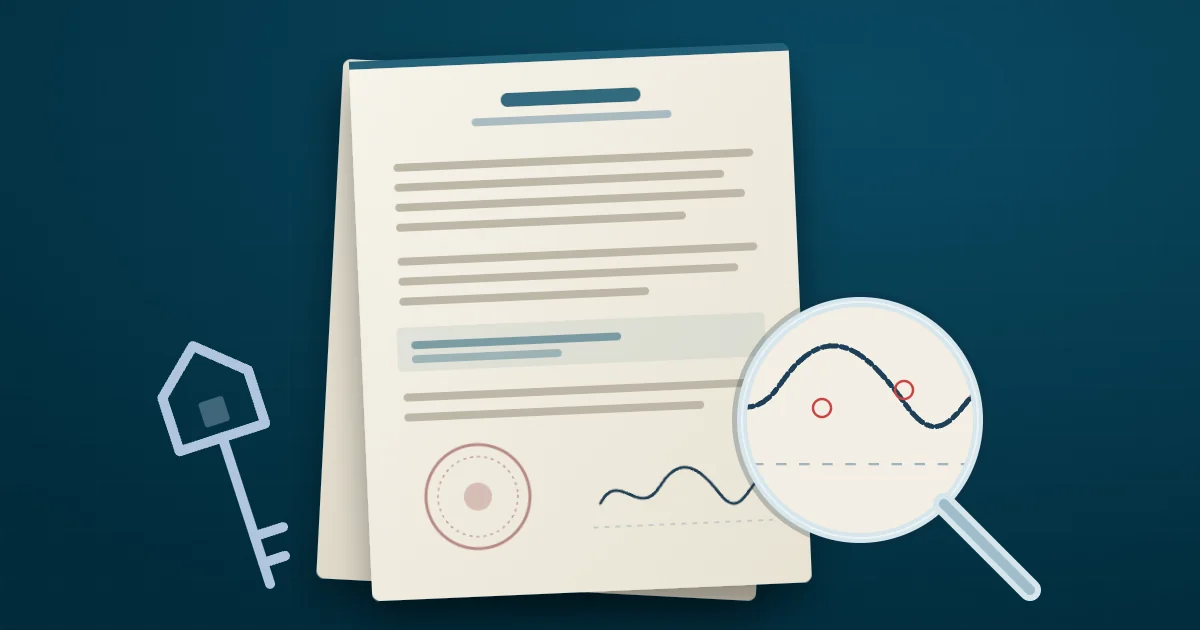
- Comparison: A point-by-point comparison of the questioned signature with the tenant’s genuine (contemporaneous) reference signatures (bank, notary and public authority records).
b) Technical Document Examination: Seeing the Invisible
Technical examinations of the text and date sections reveal the chronology of the document:
- Differences in Ink and Pen: Instruments such as the VSC (Video Spectral Comparator) are used to determine whether the text was written with different pens or different inks. This finding may indicate that the text was not written in one sitting; however, it does not show the date on which the ink was applied.
- Physical and Chemical Examination: Microscopic scraping, erasures or traces of “cut-and-paste” assembly on the paper are made visible in the laboratory.
c) Physical and Optical Methods: A Journey into the Document’s “DNA”
A sheet of paper that looks flawless under ordinary light gives up all its secrets under the advanced instruments in our laboratory. The scientific methods we use in examinations of forged eviction undertakings and alterations are:
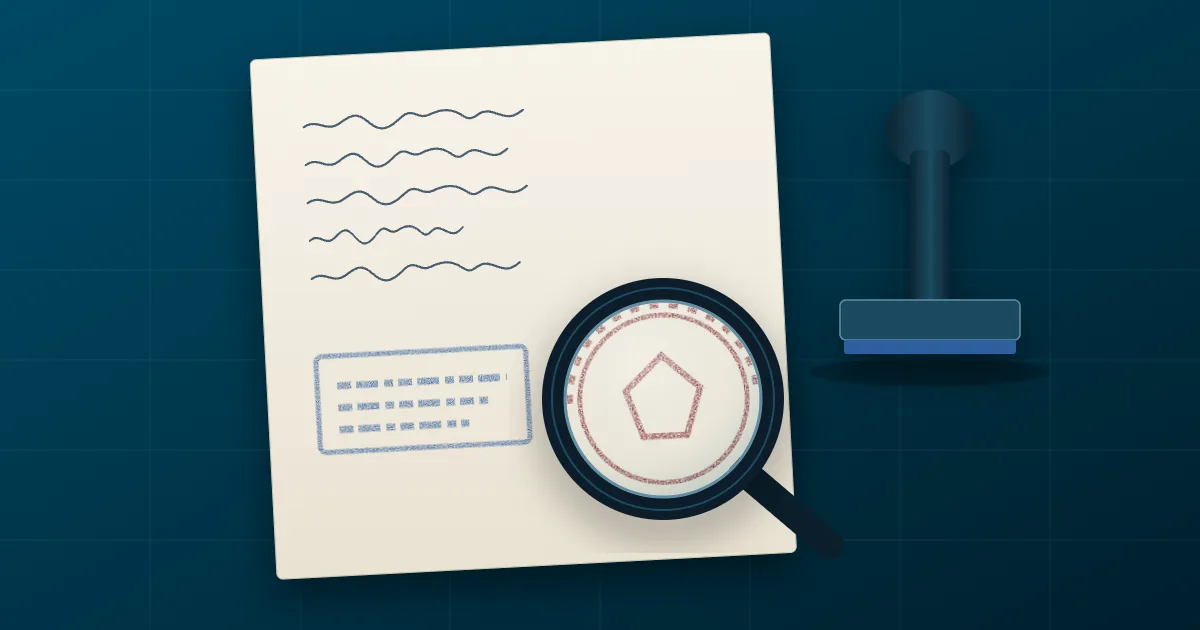
- Microscopic Analysis (Magnification): The start and end points of the lines and the effect of pen pressure on the paper fibres are examined to test the speed and naturalness of the writing.
- Oblique Light Technique: Light directed at the paper surface at a specific angle reveals paper fibres thinned by erasure or scraping, as well as hidden indentations (impressions transferred to the sheet below).
- Spectral Examination (UV / IR Light): Using radiation at different wavelengths (ultraviolet and infrared), “added” inks that look the same colour but differ in chemical composition are distinguished immediately.
- Use of Advanced Technology: In our analyses we use world-class instruments with advanced optical systems, such as Forenscope Document Examination, to document in digital form even the smallest trace of interference that the naked eye misses.
4. A Guide to Avoiding Harm with Eviction Undertakings
To avoid trouble in legal proceedings involving forged eviction undertakings, these are the critical points both parties should bear in mind:
Golden Rules for Tenants:
- Do Not Sign Blank Paper: Blank sheets presented for signature as an “annex to the lease” may later be filled in against you. Never sign a blank sheet of paper.
- Write the Dates Yourself: Make sure that the eviction date and the date of issue are filled in personally, in your own handwriting, at the time of signing.
- Keep a Copy: Always keep a copy of the document just as carefully as the original, or at least take a high-resolution photograph and archive it digitally.
Safeguards for Landlords:
- Handwriting Requirement: If the document is not merely a signature but the text is also handwritten by the tenant (name, surname, Turkish ID number), it becomes harder to deny.
- Spousal Consent: For properties that serve as the family home, having the undertaking signed by both spouses strengthens its legal validity.
- Principle of Good Faith: Any addition or erasure made to the document afterwards may cost you your entire case and even expose you to criminal liability.
- Never sign blank or incompletely filled-in sheets.
- Always add the dates in your own handwriting at the time of signing.
- Always keep a clear copy of any document you sign.
- Ask the tenant to write the entire text of the undertaking by hand.
- If a family lives in the property, obtain signatures from both spouses.
- Avoid making any later additions or corrections to the document.
5. The Serious Legal Consequences of Forgery
It should be remembered that drawing up a forged eviction undertaking, knowingly using such a document or altering it are serious offences under the Turkish Criminal Code (TCK):
- Forgery of Official/Private Documents: Carries severe sanctions that can result in imprisonment.
- Legal Invalidity: A document whose forgery has been proven by a forensic document examination report is treated in court as “null and void”, and all enforcement proceedings are halted.
Not Sure Whether a Document Is Genuine?
Forged documents are legally null and void. Prevent the loss of your rights with an expert forensic document examination report.