You live abroad and own an apartment in Turkey. One day a neighbour, a relative or the building manager tells you it has been sold. At the land registry the file shows a sale signed by someone acting as your attorney, on the strength of a power of attorney you never gave. This is how most forged power of attorney cases in Turkey come to light: late, and through someone else.
Below we explain how a forged power of attorney (vekaletname) is produced in Turkey, how you can check whether one has been issued in your name, why a notarial document is hard to challenge and what a forensic examination looks at, with reference to the Turkish Notaries Law, Civil Code and Criminal Code. The legal route, including any claim to recover the property, should be planned with a Turkish lawyer; our field is the technical examination of the document.
In brief
- A power of attorney for a Turkish property transaction must be drawn up by a notary in full notarial form (düzenleme şeklinde).
- Such a document is valid until its forgery is proven, so the person challenging it carries the burden of proof.
- Powers of attorney issued through Turkish notaries can be listed on the e-Devlet portal under “Kişi Vekaletnameleri Sorgulama”.
- Courts and prosecutors can obtain the original from the notary’s archive; the signature on it can then be compared with your genuine signatures.
- Forging a notarial document carries two to five years’ imprisonment, increased by half because the document is valid until proven false.
- Statutory references reflect the texts in force on 18 October 2026.
How is a power of attorney forged in Turkey?
Under Article 89 of the Notaries Law (Noterlik Kanunu), contracts and powers of attorney that by their nature require a transaction at the land registry must be drawn up by the notary in full notarial form1. A simple signed letter is not enough to sell real estate. Fraudsters therefore need something that looks like, or is, a notarial deed. It is usually done in one of four ways:
- Impersonation at a notary. Someone appears before a Turkish notary with a forged identity document in your name and signs the power of attorney. The deed is genuine as a notarial act, but the signature in the notary’s file is not yours.
- Forged consular or foreign deed. A power of attorney supposedly issued by a Turkish consulate abroad, or by a foreign notary with an apostille, is fabricated or its signature is imitated.
- Counterfeit document. A paper that imitates a notarial deed is produced from scratch, with fake stamps, seals and a journal (yevmiye) number that does not exist.
- Altered genuine power. A real power of attorney, for example one limited to paying utility bills, is expanded by adding the authority to sell.
Each pattern leaves different traces. In the first, the forgery is in the person and the signature; in the last two, it is in the paper, the print and the ink.
How can I check whether a power of attorney exists in my name?
Start with the e-Devlet portal. Under the Turkish Notaries Union (Türkiye Noterler Birliği) it offers a service called “Kişi Vekaletnameleri Sorgulama”, which lists powers of attorney issued in your name5. According to the announcements made when it was introduced, it covers powers issued through notaries from 1 March 2016 onwards, together with revocations. You need an e-Devlet login; foreign nationals with a Turkish foreigner identity number can apply for one.
If a power appears that you do not recognise, note the notary, the date and the journal number. Your Turkish lawyer can then request a copy from that notary and the title deed file from the land registry. Powers issued at Turkish consulates abroad are scanned into the notaries’ electronic archive, so copies of these can also be obtained through a notary in Turkey.
A power you did give, but no longer need, should be revoked. A revocation sent by email or post is not enough; it must go through a notary or a Turkish consulate.
Why is a notarial power of attorney hard to challenge?
Because Turkish law presumes it is genuine. Article 82 of the Notaries Law states that transactions drawn up by a notary in full notarial form are valid until their forgery is established1. The Code of Civil Procedure says the same from the evidence side: deeds drawn up by a notary are conclusive evidence unless their forgery is proven (HMK 204/1)3.
In practice this means the burden is on you. Saying “I was not in Turkey that day” is a start, and travel records can support it, but the court will expect the forgery itself to be shown. A technical examination of the document and of the signature in the notary’s file is usually the backbone of that proof.
The same presumption makes the offence heavier. Under TCK 204/1, forging an official document or using a forged one carries two to five years’ imprisonment; TCK 204/3 increases the penalty by half where the document is, by law, valid until its forgery is proven4. A forged notarial power of attorney falls into that category.
What does a forensic examination of a power of attorney look at?
First, the signature in the notary’s archive. The notary keeps the signed original of the deed. Since an amendment of July 2026, Article 55 of the Notaries Law provides that when a court, criminal judgeship of peace or prosecutor asks for the original, the notary keeps a certified copy and sends the original itself1. That original is the document to examine.
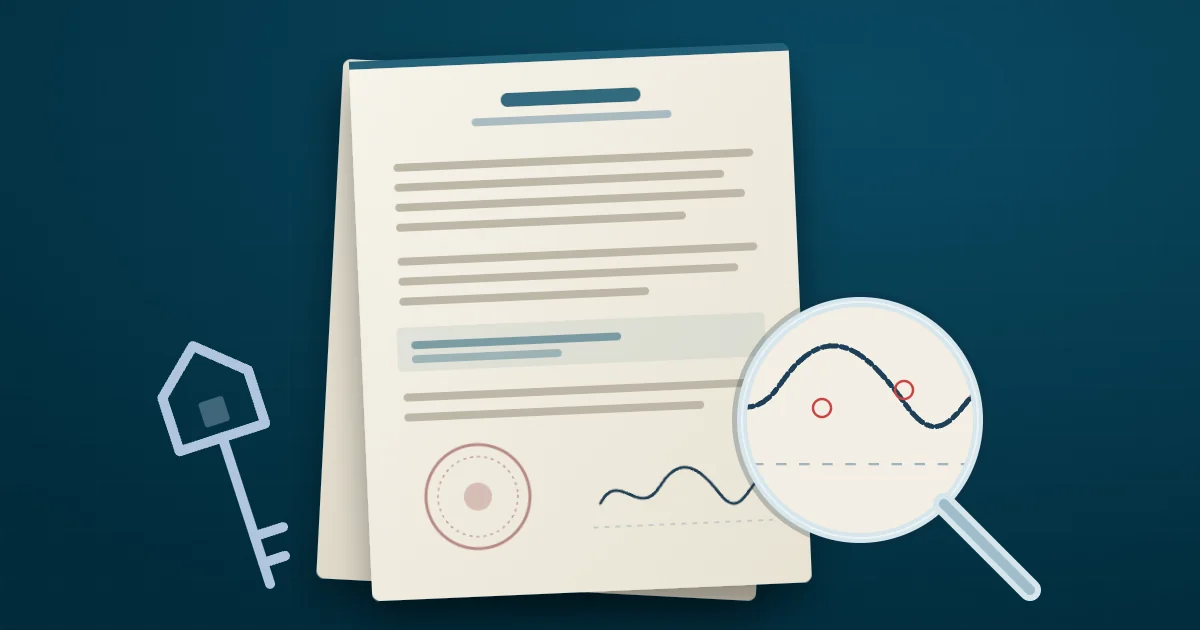
The disputed signature is compared with your genuine signatures from around the same date: your passport, bank signature cards, earlier notarial deeds, signatures held by Turkish or foreign authorities. A signature written by someone imitating you tends to show tremor, hesitation, pen lifts and an unnatural writing speed under the microscope. Where the impostor did not even try to imitate your signature, the difference is often plain. How comparison material is chosen is explained in reference samples for handwriting comparison.
Where the document did not come from a notary at all, the examination moves to the paper. Notary stamps and seals are compared with genuine impressions from the same office, the print is checked for the technique used, and the journal number is checked against the notary’s records. In an altered power of attorney, added lines often differ in ink, alignment or typeface from the original text; some of these differences only appear under UV or infrared light. Our stamp and seal examination and signature examination pages describe the methods.
Can I get my property back after a forged power of attorney?
Often, but not always, and the answer depends on who holds the title now. Under the Turkish Civil Code, a registration based on a legal transaction that is not binding is an unlawful registration (TMK 1024/2), and anyone whose real right is harmed by it can sue to have the land register corrected (TMK 1025)2. This is the action known as tapu iptal ve tescil.
The complication is the good-faith buyer. TMK 1023 protects a third party who acquires a right in good faith relying on the land register, while TMK 1024 denies that protection to anyone who knew or should have known that the registration was unlawful. If the property was sold on to a second buyer, how these rules apply in a forgery case is decided by the court on the facts, so your lawyer’s view of the file matters here more than any general rule.
If the property cannot be recovered, compensation remains. TMK 1007 makes the Turkish State liable for all damage arising from the keeping of the land register, with recourse against the officials at fault, and Article 162 of the Notaries Law makes notaries liable for damage caused by work done wrongly or incompletely12. Both claims also turn on proving the forgery.
What should I do first?
- Check the e-Devlet list of powers of attorney in your name and the current title of your property.
- Revoke any power of attorney you no longer need, through a notary or a Turkish consulate.
- Instruct a Turkish lawyer to obtain copies of the power of attorney and the sale deed and to consider an injunction on the title to stop further transfers.
- File a criminal complaint with the public prosecutor; the prosecutor can obtain the original deed from the notary.
- Collect your genuine signatures from the relevant period and your travel records for the date of the deed.
- Have the signature and the document examined before the court appoints its own expert, so your lawyer knows what the evidence shows.
A party expert opinion can be filed in civil proceedings under HMK 293 and in criminal proceedings under CMK 67. What such a report can and cannot do in court is covered in expert opinion, and the penalties for signature forgery in forged signature penalty in Turkey.
Living outside Türkiye? The whole examination can be handled remotely, from an online consultation to a report in English or German. See forensic document examination from abroad.
This article is for general information and is not legal advice. Statutory references reflect the Turkish Notaries Law, Civil Code, Code of Civil Procedure and Criminal Code as in force on 18 October 2026; the scope of the e-Devlet query reflects public announcements available on the same date.
A power of attorney you never signed?
Send us a copy of the deed and samples of your genuine signature. We assess the signature and the document and prepare an expert opinion that your Turkish lawyer can file.
Document forgery examination Request an expert opinion +90 505 215 71 10
Istanbul · Ankara · Adana
Sources
- Turkish Notaries Law No. 1512 (Noterlik Kanunu), Art. 55, 82, 89, 162. mevzuat.gov.tr
- Turkish Civil Code No. 4721 (TMK), Art. 1007, 1023, 1024, 1025. mevzuat.gov.tr
- Turkish Code of Civil Procedure No. 6100 (HMK), Art. 204, 293. mevzuat.gov.tr
- Turkish Criminal Code No. 5237 (TCK), Art. 204. mevzuat.gov.tr
- e-Devlet, Türkiye Noterler Birliği, Kişi Vekaletnameleri Sorgulama. turkiye.gov.tr
Frequently Asked Questions
How do I find out whether a power of attorney was issued in my name in Turkey?
Check the e-Devlet service Kişi Vekaletnameleri Sorgulama under the Turkish Notaries Union. According to its launch announcements it lists powers issued through notaries since 1 March 2016, including revocations. An e-Devlet login is required.
Is a notarial power of attorney valid even if it is forged?
It is presumed valid until the forgery is proven (Notaries Law Art. 82, HMK 204/1). The person challenging it has to prove the forgery, which is why a technical examination of the deed and the signature matters.
Can I recover property sold with a forged power of attorney?
A registration based on a non-binding transaction is unlawful and can be corrected by court action (TMK 1024, 1025). If the property was sold on, the protection of a good-faith buyer under TMK 1023 may apply; your Turkish lawyer assesses this on the facts.
Which signatures are used for comparison?
Genuine signatures from around the date of the deed: passport, bank signature cards, earlier notarial deeds and signatures held by authorities. A signature made in front of the court is useful, but rarely enough on its own.