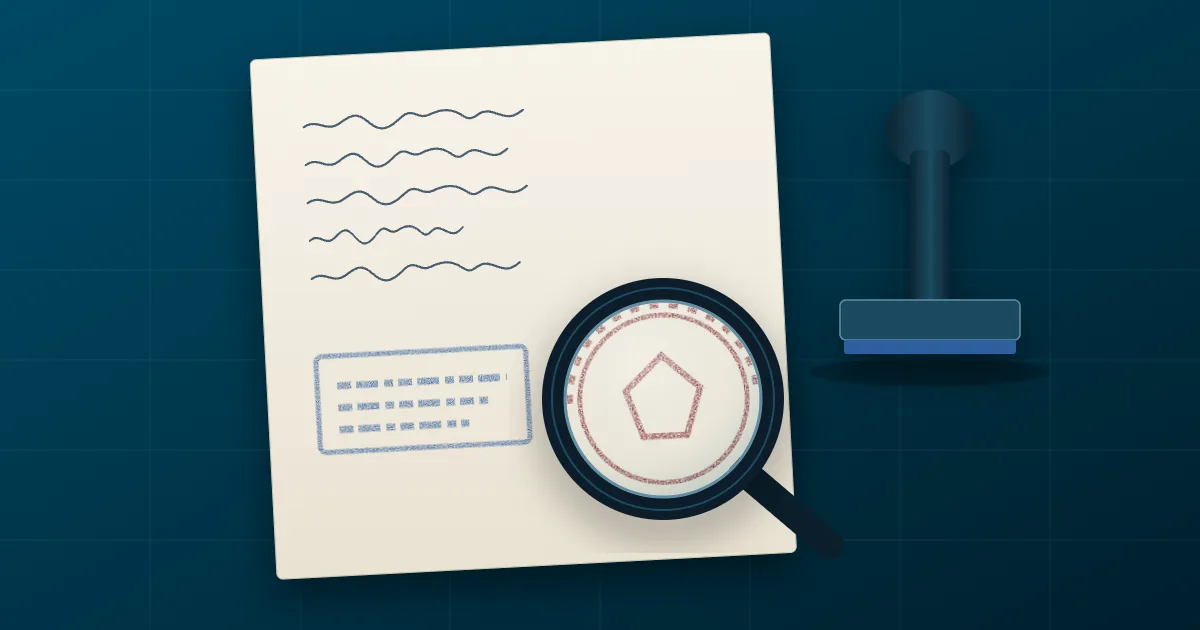

The path to a correct conclusion in forensic document examinations does not lie solely in analysing the questioned document; the truly critical element is the availability of reliable reference samples (mukayese belgesi). To establish scientifically who wrote a piece of handwriting or a signature, comparison samples belonging to the person — that is, reference documents — are always required. The better the quality and the wider the variety of these samples, the more reliable the examination becomes.

What Are Genuine (Contemporaneous) Samples?
Genuine samples are real handwriting and signature specimens that a person produces naturally in everyday life, with no examination in mind.
These documents:
- Contain natural motor movements
- Reflect the person’s real handwriting and signature habits
- Are produced unconsciously and automatically
For this reason, they carry considerable weight in forensic document examinations.
Examples of Genuine Samples
- Bank documents
- Official applications
- Contracts
- Notarial documents
- Everyday notes
- Older signed documents
The handwriting and signatures on these documents reveal the person’s natural characteristic features.
In forensic document examination, genuine samples often carry greater weight, because the person:
- Does not know they are being examined
- Does not try to change their handwriting or signature
- Maintains their natural rhythm
This allows the true characteristics of their handwriting and signature to emerge.
With requested samples taken in the presence of the court or an expert, however, the person may act consciously, try to alter their writing or move in a more controlled way than usual. For this reason, examiners give particular weight to genuine samples in their evaluation.
“To reach a correct conclusion in forensic document examination, the questioned document alone is not enough; the real strength lies in the quality of the reference samples.”
What Are Requested Reference Samples?
Requested reference samples are comparison specimens taken for the purpose of the examination, under expert supervision and in accordance with specific criteria.
These documents:
- Are prepared in a controlled environment
- Contain a set number of repetitions
- Make technical comparison possible
The aim is to compare scientifically the writing or signature under examination with the person’s current handwriting and signature habits.
How Are They Used in the Examination?
Genuine and requested reference samples are evaluated together. During the comparison, the following technical parameters are examined:
- Letter forms
- Line quality
- Rhythm of handwriting and signature
- Pressure distribution
- Initial and terminal strokes
- Slant and proportions
- Speed and fluency
In this process, detailed analysis can be carried out with advanced optical systems and instruments such as the Forenscope DocEx.
The Problem of Insufficient Reference Material
Another important point in practice is that the reference samples should cover a sufficiently wide date range. A person’s handwriting and signature characteristics can change over time; differences may arise depending on age, health, habits and the writing instruments used. Rather than relying solely on recent samples, including samples from around the date of the questioned document directly increases the scientific validity of the comparison.
One of the most significant problems in the examination process is a lack of sufficient comparison material.
Insufficient samples:
- Can make the technical evaluation more difficult
- Can reduce the quality of the examination
- Can limit the ability to reach a firm conclusion
This is why a large number of genuine samples, produced naturally and from different dates, is so important.
In handwriting examination and signature analysis, the examiner forms a scientific opinion based on the reference material available. The higher the quality of that material, the stronger the examiner’s report and the more readily it will be accepted in court. To avoid losing rights in document disputes, it is therefore very important to review the available documents with an examiner before the examination begins.
Conclusion
To reach a correct conclusion in forensic document examination, the questioned document alone is not enough. Genuine and requested reference samples are the fundamental comparison material that reveals a person’s handwriting and signature habits, motor behaviour and characteristic line structure.
Genuine samples in particular carry high value for scientific examination because they reflect natural, automatic motor movements. The quality and sufficiency of the samples used for comparison are therefore directly relevant to the reliability of the examination.
Frequently Asked Questions
What is a reference sample?
Reference samples are specimens used in forensic document examination to compare with questioned handwriting or a questioned signature. There are two main types: genuine samples that a person produces naturally in everyday life, and requested comparison samples taken under expert supervision.
What is the difference between a genuine sample and a requested sample?
Genuine samples are specimens a person produces naturally, with no examination in mind, such as bank documents, notarial documents or older contracts. Requested samples are comparison specimens taken in a controlled setting under expert supervision for the purpose of a forensic examination. Genuine samples generally carry greater scientific value because there is no chance that the person has altered their handwriting or signature.
Which documents can be used as reference samples in forensic document examination?
Bank documents, official applications, contracts, notarial documents, everyday notes and older signed documents are the most commonly used genuine reference samples. Having as many of these documents as possible, from different dates, increases the reliability of the examination.
Can an examination be carried out without sufficient reference samples?
Insufficient comparison material can make the technical evaluation more difficult and limit the ability to reach a firm conclusion. Providing as many genuine samples as possible, from different dates and produced under natural conditions, therefore directly affects the quality of the examination.
Which technical parameters are compared in the examination?
In forensic document examination, technical parameters such as letter forms, line quality, the rhythm of handwriting and signature, pressure distribution, initial and terminal strokes, slant and proportions, and speed and fluency are examined. These analyses are supported by advanced optical systems and specialist instruments such as the Forenscope DocEx.