The Earliest Examples and the Road to the Present
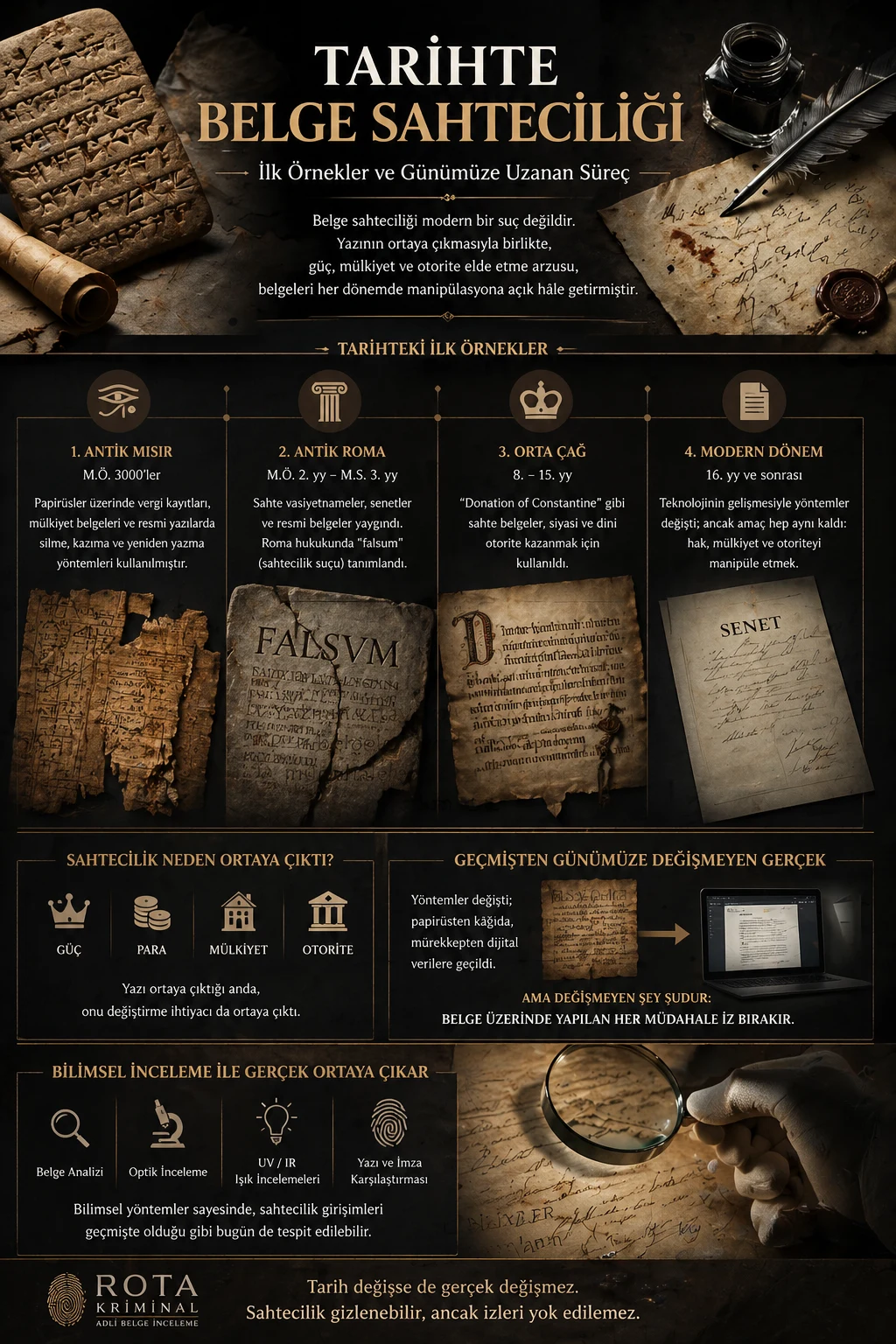
Document forgery is not a crime that belongs only to today’s modern world. On the contrary, the history of document forgery stretches back to the very first days of writing. For as long as humanity has existed, written documents have been the most tangible representation of power, property and authority. This great power carried by documents has left them open to manipulation and alteration in every era. When we look at the archaeological record, we can clearly see that forgery is almost as old as writing itself. Indeed, the first striking examples of document forgery in history go back as far as the civilisations of Ancient Egypt and Mesopotamia. What Is Forensic Document Examination?
Scientific Examination, Then and Now
Forgery methods have changed shape since the earliest periods of history, but with the development of forensic science they no longer remain in the dark. To learn about the scientific methods used to analyse questioned documents and detect alterations, take a look at our forensic document examination processes.
Document Manipulation and Alteration in Ancient Egypt
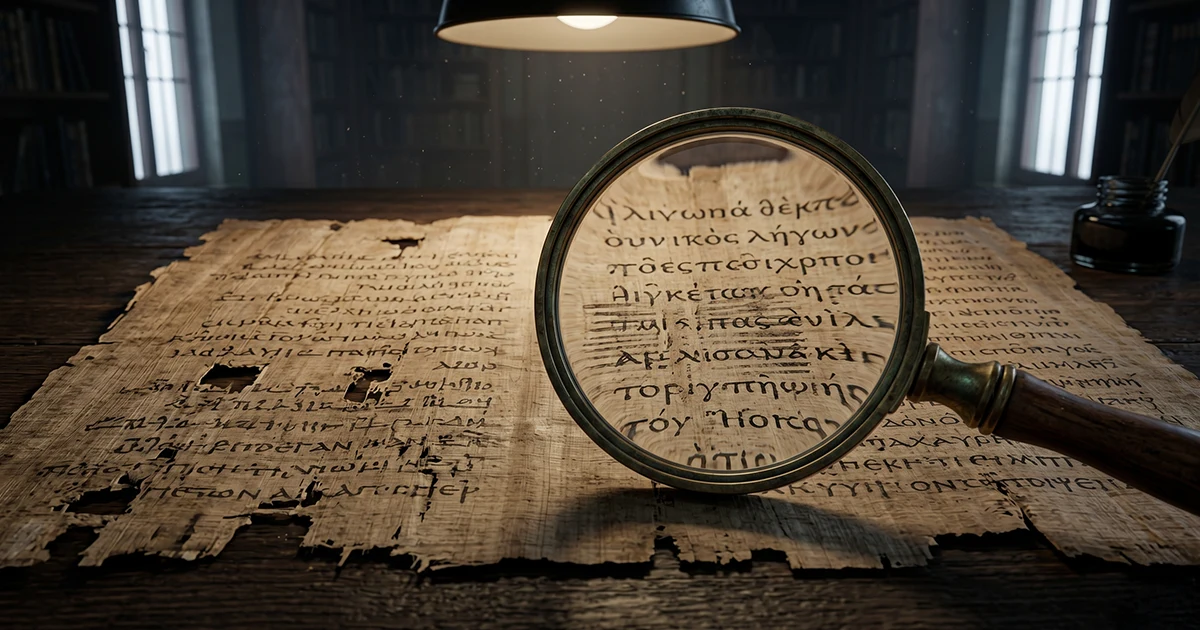
When we trace document forgery through history, the papyri of Ancient Egypt offer us some very striking evidence. Documents written on papyrus at the time show serious interventions such as altered tax records, property rights being improperly rewritten and official state texts being falsified.
The forgers of the period usually carried out these manipulations by erasing writing, scraping the papyrus surface or adding new text to the erased area. In fact, what we see here are the earliest and most primitive historical examples of the erasure and scraping forgeries we frequently encounter in forensic document examination today.
Systematic Document Forgery in Ancient Rome
In the history of document forgery, Ancient Rome stands out as the period in which this crime took on a far more systematic form. Within the bureaucratic structure of the Roman Empire, forged wills, irregular promissory notes and manipulated official documents became a widespread problem. The defence the state developed against this threat has gone down in legal history. To prevent this crime, Roman law defined the term “falsum” (the offence of forgery) for the first time and attached legal sanctions to it.
From Roman Law to Modern Forensic Science
Acts of forgery, called “falsum” in Ancient Rome, appear today in more complex forms such as signature imitation, alteration and the production of forged documents. Protecting the legal validity of every kind of document, from wills to commercial contracts, is of vital importance.
Signature and Document AnalysisThe Greatest Forgery of the Middle Ages: The Donation of Constantine
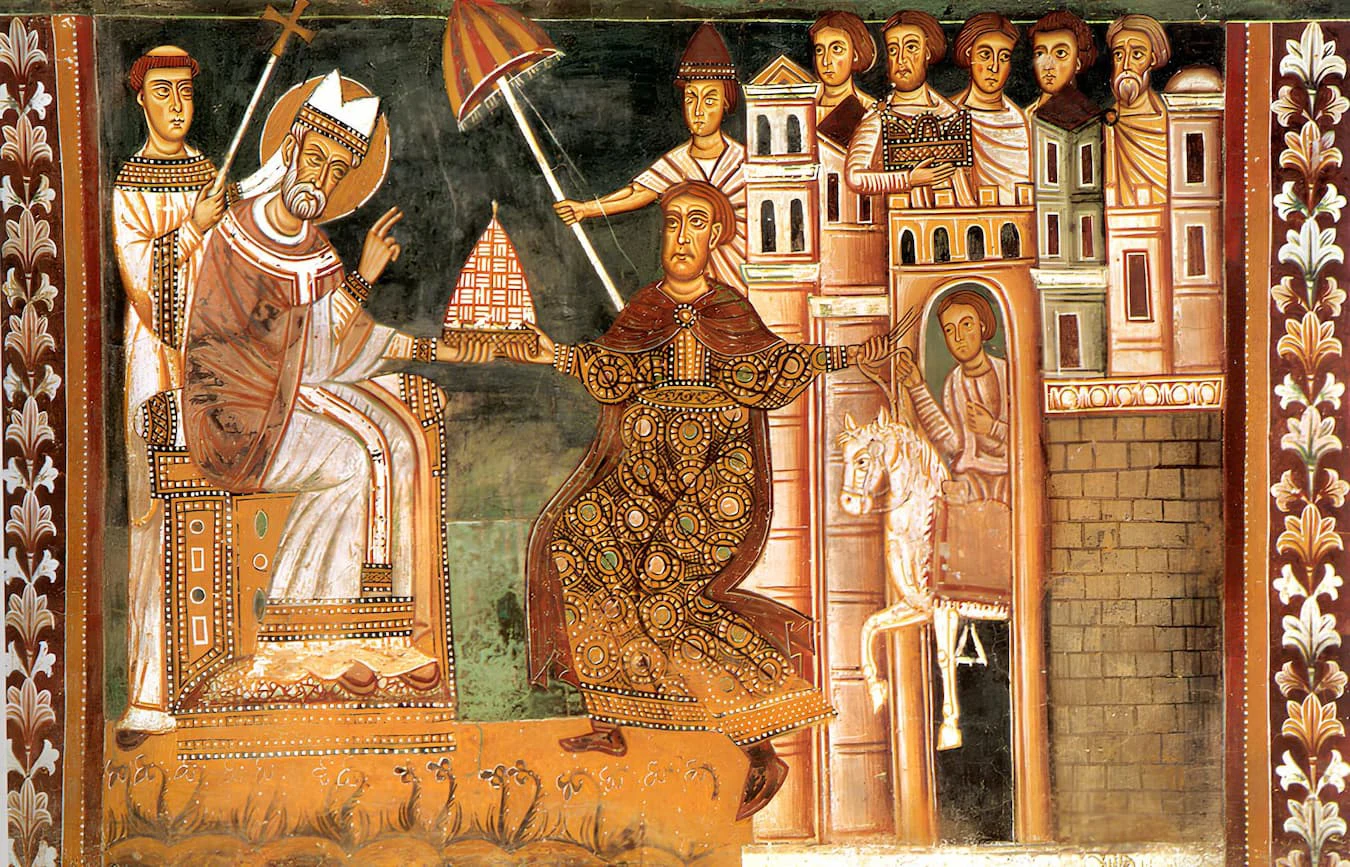
Perhaps the most shocking event in the history of document forgery is the document known as the “Donation of Constantine” . According to this forged document, the Roman Emperor Constantine declared that he had transferred all his powers and control of the Western Roman territories to the Church. Used for centuries to legitimise authority, the text was later established through detailed examination as one of the most famous forgeries in history.
Philological and technical examination proved that the language used in the text did not belong to the emperor’s lifetime and that its expressions bore the hallmarks of much later centuries. This case is one of the clearest examples of how vital linguistic and historical consistency analysis is when detecting document forgery in history.
Documents That Changed the Course of History
“Documents such as the Donation of Constantine have caused power to change hands over the course of history. Today, this kind of text analysis requires broad expertise that covers not only the physical characteristics of a document but also the consistency of its content and context.”
The Core Motivations Behind Document Forgery and Why It Arises
Although methods have evolved throughout the history of document forgery, the basic motivations that trigger this crime have barely changed in thousands of years. From the moment writing was invented, the need to record information was accompanied at the same time by the desire to change that information in one’s own favour. Because documents have represented power, money, property and authority in every era, they have become the tools most open to manipulation. The desire of individuals or groups to obtain unjust gain, acquire status or undermine existing authority is the main source of document forgery in history.
A Truth That Has Never Changed
Throughout the history of document forgery, the materials and tools used have undergone revolutionary change. Texts written with reeds on papyrus in the ancient world gradually gave way to parchment, paper and ultimately today’s digital data. Writing tools have likewise evolved from handwriting to the typewriter, and from the printing press to computer code. Yet despite this technological transformation, one basic truth has not changed in thousands of years: every deliberate intervention on a document leaves a trace. Whether it is scraping in Ancient Egypt or the alteration of a modern digital signature, in the light of forensic science every intervention is detectable evidence.
Technology Changes, Analytical Power Remains
As documents have evolved from papyrus to digital form, the methods for detecting forgery have developed just as quickly. Today, forensic document examination experts can use scientific methodologies to reveal even traces hidden by the most sophisticated methods.
Conclusion: Forgery Can Be Concealed, but Its Traces Cannot Be Destroyed
Document forgery is a phenomenon as old as human history, and the process that began with the discovery of writing continues today. Although the materials and techniques used have changed greatly from antiquity to the present, the basic logic of forgery and the motivations behind it have remained the same.
Today, thanks to advanced techniques and scientific methods, even the most professional interventions on a document can be detected, just as they could in the past. Document forgery in history has taught us one thing clearly: however sophisticated the method, every alteration leaves a trace. Examinations carried out in the light of science continue to bring these traces to light and serve the cause of justice.
Scientific Truth Does Not Change
“However skilfully forgery is concealed, it leaves an unmistakable trace when faced with forensic methods. At Rota Kriminal, we combine this scientific discipline, inherited from every period of history, with today’s most advanced technologies.”