
An International Academic Contribution from Rota Kriminal
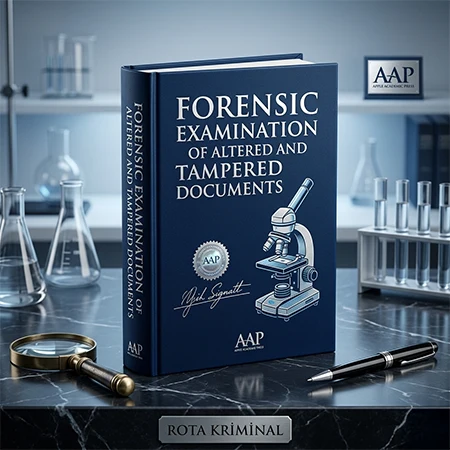
Forensic Examination of Altered and Tampered Documents (September 2026)
“Forensic Examination of Altered and Tampered Documents”, a significant academic work in the field of forensic document examination at a global level, has been accepted for publication in September 2026. The book will be published by the internationally respected academic publisher Apple Academic Press.
At ROTA KRİMİNAL, we are very proud to be part of this high-quality work, which contributes to the scientific examination of document forgery.
What the Book Covers
This work offers a comprehensive treatment of the examination of altered and tampered documents using forensic science methods. It presents a broad methodological perspective, from traditional document examination techniques to modern optical and digital analysis systems.
A Contribution to the International Literature
Document forgery is a serious offence with legal and economic consequences worldwide. Scientific reliability, technical accuracy and objective methods of analysis are therefore of great importance.
At ROTA KRİMİNAL, we see the inclusion of academic work on forensic document examination in the international literature as a strategic step for the development of the discipline and the strengthening of scientific standards. ✅
Why Examining Alterations and Obliterations Matters
Alterations and obliterations, the subject of the chapter, are among the most common forms of document forgery in practice. A single zero added to the amount on a promissory note, a date erased and rewritten, or a phrase scribbled over until it is unreadable can change the legal effect of a document entirely. Such interventions are often invisible to the naked eye; the different responses of inks under light, disturbed paper fibres and the sequence of writing can only be revealed with suitable equipment.
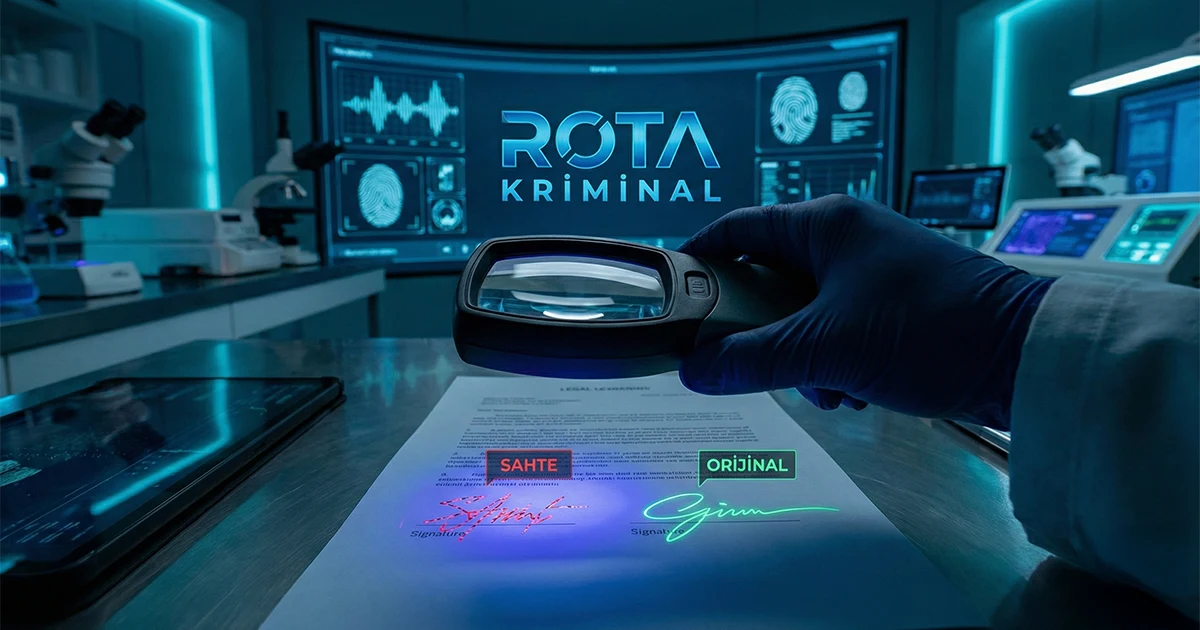
The examination is therefore carried out with non-destructive methods: light at different wavelengths, oblique lighting and microscopic examination make it possible to read erased or covered entries again and to identify later additions. The systematic approach set out in the chapter helps examiners report their findings in a way that is repeatable and open to review, which is decisive when a report is submitted to a court.
Where alteration is suspected, the original document should always be examined. On photocopies or scans, ink differences, traces of erasure and changes to the paper surface are largely lost. The document should therefore not be folded, stapled or written on, so that the later examination can produce reliable results.
If you suspect a similar change on a promissory note, contract or official document, you can find out more about our document alteration examination service.
Official Publication and Source Link
Detailed technical information about this comprehensive academic work on forensic document examination, alterations and forgery is available on the publisher’s official page.
VIEW THE BOOK ON THE OFFICIAL WEBSITE