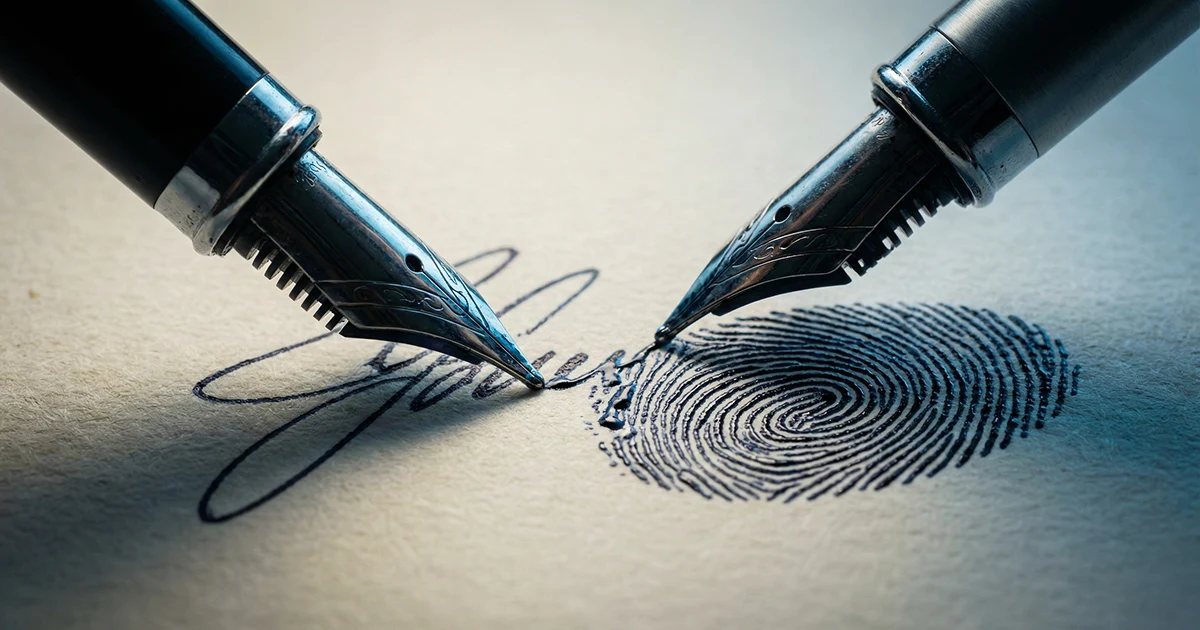
Why Shouldn’t a Signature Be Simple? It Is Your Fingerprint on Paper!
A signature is the most powerful biometric element representing a person’s identity, will and consent, both in the legal system and in everyday life. For most people, signing seems a tedious formality needed to complete a document, yet the ink trace left on the paper at that moment is proof that the person accepts full legal responsibility. Unfortunately, extremely simple signatures consisting of just a few strokes or initials are becoming widespread today, for reasons of “saving time” or “aesthetics”.
From the perspective of forensic science, however, a simple signature is a door left open for its owner and a golden opportunity for people with bad intentions (forgers). In this article we examine why a signature should be complex and characteristic, the forensic risks created by simple signatures, the anatomy of a secure signature and the answers to the question why a signature should not be simple.
✒️ Your Signature Is Your Fingerprint on Paper
It is not a mere scribble; it represents your legal existence. The simpler you sign, the wider you leave the door open to people with bad intentions. Your signature should be so personal that it cannot be imitated.
The Legal and Technical Nature of a Signature
Under the Turkish Code of Obligations (TBK) and the Code of Civil Procedure (HMK), a signature is the “constitutive” element declaring that a text has been read and understood and that its content is accepted unconditionally. A signature is a “neuromuscular” (nerve–muscle) reflex resulting from the coordinated work of the muscles of the hand, wrist and arm with the motor cortex of the brain.
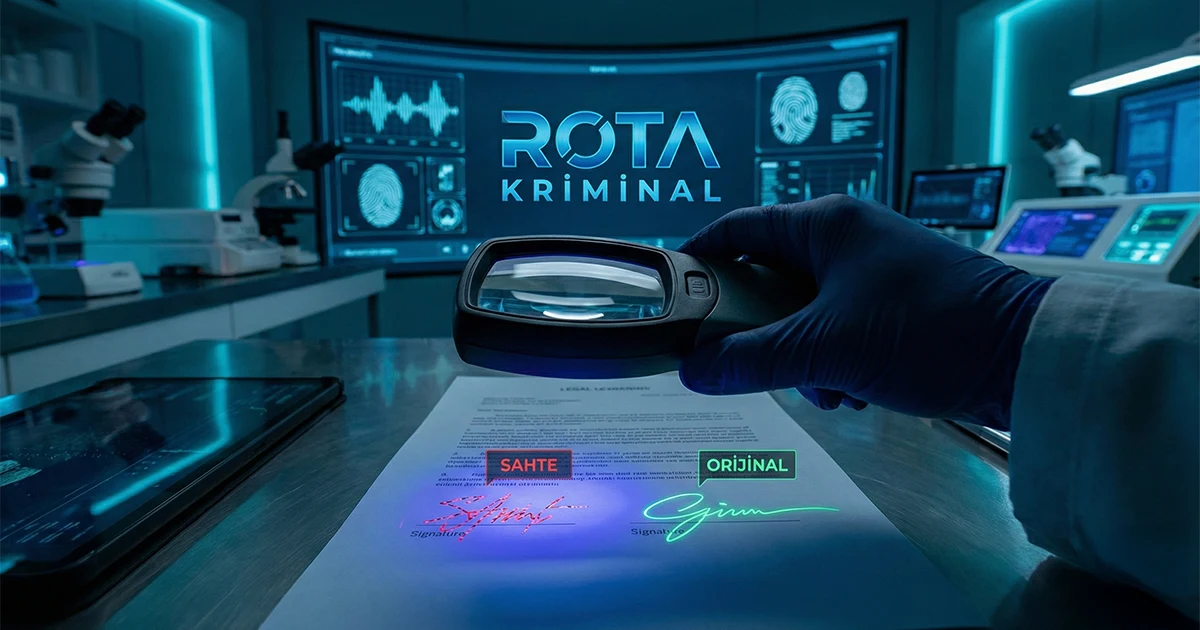
When signing, a person does not simply draw a shape; they apply a certain pressure (line quality), a certain speed (acceleration) and a characteristic slant to the paper. When examining whether a signature is forged, forensic document examiners look not only at the shape but at these “invisible” dynamics. The simpler the signature, however, the harder these dynamics are to detect. This makes the question why a signature should not be simple all the more important.
Forensic Dead Ends and Risks Created by Simple Signatures
Why shouldn’t a signature be simple? A simple signature is one that usually consists only of the initials of the first name and surname, is made up of a few straight lines, or lacks characteristic features to the point that anyone could produce it. Such signatures play the leading role in the cases that most often end in “no conclusion could be reached” in forensic laboratories.
1. Ease of Imitation (Simulation Risk): For a professional forger, imitating a complex, loop-rich and rapidly written signature while matching the same pen pressure and speed is almost impossible. A simple signature (for example just a letter “A” followed by a line), however, can be imitated by anyone with average manual skill after just a few attempts, so successfully that it “cannot be distinguished in a forensic examination”.
2. Difficulty of Establishing Authorship: Imagine applying to the court claiming that the signature on a promissory note (senet) or contract is not yours (denial). If your signature is very simple, the Forensic Medicine Institute (Adli Tıp) or forensic examiners may report that “since this signature has a very simple design, no definite opinion could be given as to its authorship”. In a case you are right about, this can put you in the wrong because your signature lacks characteristic features, and cause you serious financial losses.
3. The “Initials” Misconception: In Turkish law, a “signature” (imza) and “initials” (paraf) are often confused. Initials are a simple mark of approval consisting only of the first letters of a name, and they do not replace a valid signature in formal, binding transactions (promissory notes, cheques, contracts). People who sign as simply as initialling put themselves at risk regarding the legal validity of these documents.
RISK WARNING: Initials Are Not a Signature!
Simple marks consisting only of initials, or that amount to “initialling”, do not protect you in legal documents. Because of a “lack of characteristic features”, authorship may not be established in forensic examination, and you may lose even though you are in the right.
What Should a “Secure Signature” Look Like from a Forensic Point of View?
For a signature to be considered “secure”, it must contain details so personal that they could not come from the hand of someone else claiming it as their own. What can we do about the question of why a signature should not be simple? The secure-signature criteria recommended by forensic document examiners are as follows:
- Full Name and Surname: Where possible, the signature should contain the person’s first name and surname (or at least the full surname) in handwritten characters. Legible letters make the forger hesitate while imitating and cause “hesitation” (tremor) errors.
- Speed and Fluency (Acceleration): A secure signature should be written in rapid, fluent movements without lifting the pen. In a rapidly written signature the lines are smooth. Forgers slow down because they use a “look and draw” method when imitating, and tremor appears in the lines. The faster your signature, the harder it is to imitate.
- Complex Pathways: The more handwriting details there are, such as the opening and closing strokes, the way letters connect, reverse turns and extended tails, the higher the level of security.
- Continuity: Frequently lifting the pen from the paper (breaks) disrupts the unity of the signature. Signatures written in one or two movements where possible, with letters linked to each other like a chain, are more secure.
✅ Criteria for a Forensically Secure Signature
- ✓ Name and Surname: Where possible, it should contain your first name and surname in handwritten characters.
- ✓ Speed and Fluency: The signature should be written rapidly and fluently, without hesitation.
- ✓ Complexity: It should include letter connections, reverse turns and personal features.
- ✓ Writing Without Lifting the Pen: The less the pen leaves the paper, the harder imitation becomes.
Your Signature Is Your Shield
A signature is not just a procedure on paper but a legal shield protecting a person’s assets, freedom and reputation. Using a simple signature is like leaving home without locking the door; it is only a matter of time before a burglar gets in.
Especially in critical transactions such as high-value promissory notes, bank loan agreements or land registry transfers, it is vital to take your time and use your characteristic, hard-to-imitate signature that contains your name and surname and reflects your writing habits at their best. It should not be forgotten that even the best forensic examination technologies may fall short in verifying a simple signature that offers no data. To protect yourself and your future, give your signature the value it deserves and do not simplify it. Why shouldn’t a signature be simple?
🔍 Do You Suspect Your Signature Has Been Imitated?
Simple or complex, every signature gives itself away under the microscope. In doubtful cases, do not decide with the naked eye; request a scientific forensic examination.
GET A FREE INITIAL CONSULTATION