
Introduction
Drawing up a promissory note (senet), a written promise to pay that is widely used in Turkey, plays an important role in recording financial relationships and debts. These documents establish a clear debt relationship between the parties and provide a guarantee that payments will be made on time. However, drawing up promissory notes carefully is critical if they are to remain legally valid. To prevent possible disputes between lender and borrower, promissory notes must be prepared in line with certain criteria.
One of the most important aspects of drawing up a promissory note is defining the rights and obligations of the parties in detail. Details such as the identity information of both parties, the amount of the debt, the payment terms, the due dates and any interest rates must be stated clearly. It is also very important that the note bears the signatures of the persons whose signatures are required for it to be valid. These details protect the parties against legal disputes that may arise later.
An incorrectly drawn-up promissory note can cause serious problems between the parties and may even lead to the document being deemed invalid. In particular, the absence of certain legal elements that must appear on the note, or incorrect wording, can create validity issues. For this reason, care must be taken when drawing up promissory notes and the necessary legal requirements must be borne in mind. The points to consider when drawing up a promissory note are essential for a sound debt relationship and for preventing potential legal problems.
Using a Single Pen
One of the most important points to observe when drawing up a promissory note is that only one pen should be used. This practice plays a critical role in the validity and reliability of promissory notes. Notes written with a single pen reduce the likelihood of errors and increase attentiveness during the drafting process. In addition, the use of different pens may create the impression that the information on the note could have been changed over time, which may give rise to legal objections.
Drawing up promissory notes with a single pen is also important for the consistency of the wording used in the document. Different pens may contain different types of ink, which can raise doubts about the authenticity of the note. Since sensitive information, such as an obligation to be performed and its timing, must be stated clearly, using a single pen prevents this information from being misinterpreted. Furthermore, any corrections or additions to the note can also be made in a more orderly and reliable manner with a single pen.
Using a single pen when drawing up a promissory note therefore offers significant advantages in strengthening the legal validity of the document. Individuals and organisations are accordingly advised to observe this rule when drawing up promissory notes. Such diligence not only ensures the reliability of the document but can also prevent possible legal problems in the future.
The Setting in Which the Note Is Drawn Up
A promissory note should be drawn up in a trustworthy setting where the creditor and the debtor meet in person. This is of great importance both for establishing trust between the parties and for the validity of the transaction. Drawing up a promissory note in a trustworthy setting gives both parties peace of mind. This trust helps the relationship between the parties to develop on a sound footing.
It should be borne in mind that the setting in which promissory notes are drawn up directly affects the interaction between creditor and debtor. Mutual trust between the parties is a critical factor, particularly for accepting the terms stated on the note and fulfilling the commitments made. The physical security of the place where the note is drawn up also matters. To avoid any unease while the agreement is being made, a venue where the parties feel comfortable should be chosen.
⏳ Critical Warning: Time Matters
The exact date on which ink was applied cannot be determined by any method. Solvent-analysis methods used in some specialist laboratories abroad can offer only a limited assessment of whether ballpoint ink is relatively fresh, and only within approximately the first 2 years; after this period, solvent loss in the ink stabilises. It is important to have a questioned document examined on the original without delay.
In addition, the setting in which the note is drawn up should make it easy for both parties to have witnesses present. In the event of future disputes, witnesses provide an important point of reference regarding the content of the arrangement. Stating clearly all the terms mutually agreed during the drafting process protects the rights of the parties. In short, drawing up promissory notes in a trustworthy setting is a critical step that provides safeguards for both parties.
Having the Debtor Write the Text Personally
When promissory notes are drawn up, it is critically important that the text is written in pen by the debtor. This practice both increases the reliability of identity verification and significantly reduces the risk of fraud. Promissory notes written by the debtor directly reflect their intention and signature. In the event of a dispute, this can strengthen the debtor’s position and give the document a firmer standing as evidence in the legal system.

Having the debtor write the text stands out as an important step in identity verification. If the note was not written by the debtor and was drawn up solely by a third party, this may raise questions about its validity. Particularly with regard to the legal validity of promissory notes, documents written in the debtor’s own handwriting are of great importance in preventing forgery or fraud. This should therefore be taken into account not only by the debtor and creditor but also by the official authorities that review such documents.
Having the text written by the person concerned is also an effective way of preventing fraud. This process acts as a deterrent to fraud attempts. For example, where forged documents are created or the debtor’s identity is misused, details such as personal writing style and pen use can help to expose such fraud. For this reason, the requirement that the text be written in pen by the debtor is among the priority points to consider when drawing up a promissory note.
The Risk of Handing Over a Signed Blank Note
Handing over a signed blank promissory note is a major risk factor for many individuals and businesses. It can pave the way for many adverse outcomes, fraud above all. Because a signed blank note is a document signed without a specific date or amount, there is a high likelihood that it will be exploited by people acting in bad faith. In such cases, fraudsters can use the signature on the note to demand large sums in their own interest.
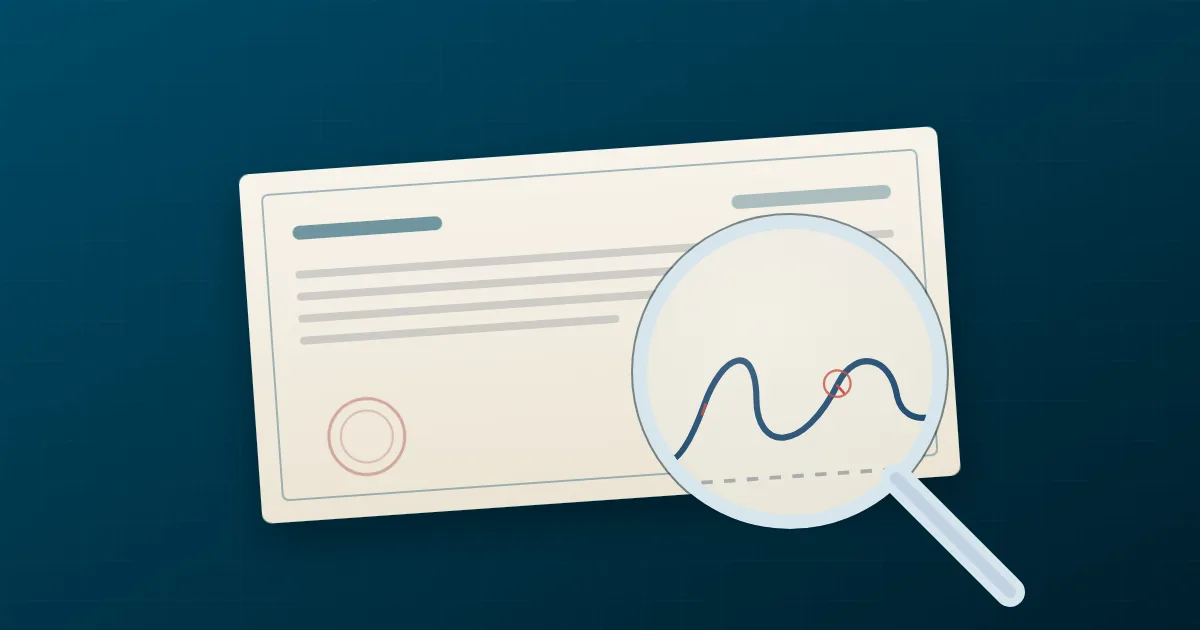
🔬 What Is Line Crossing (Intersection) Analysis?
Where a signature line and a line of writing overlap on a promissory note, we ask under the microscope: “Which one is on top?”
- If the writing runs over the signature, the note was filled in afterwards.
- If the signature lies over the writing, the document was produced in its natural sequence.
When a blank note is handed over, attention must be paid to how and why the signature is being used. If a note is signed without sufficient information and safeguards, this can lead to serious legal problems in the future. In business in particular, signed blank notes can cause confusion in tracking receivables and debts. This can damage the parties’ trust in each other and adversely affect commercial relationships.
Certain measures can be taken to minimise the risk of handing over a signed blank note. First and foremost, it is important never to leave a note completely blank or to agree to content being added after signing. It is also recommended that promissory notes be given only to people you know or to reputable organisations. If there is any doubt about the validity of a note, legal advice should be sought from a lawyer where possible. With such measures, the risks of handing over signed blank notes can be reduced and potential fraud prevented.
Accepting Promissory Notes by Endorsement from Strangers
Promissory notes provide security in commercial relationships; however, accepting them by endorsement from people you do not know carries some significant risks. These should be considered from both a legal and a fraud perspective. First of all, a note received from a stranger may leave the creditor facing serious difficulties if the other party goes bankrupt or fails to pay the debt. In such a case, legal proceedings can be highly complex and lengthy.
From a legal point of view, the endorsement of a promissory note involves many conditions that must be taken into account. Whether the endorsed note is lawful, the debtor’s rights of objection and the responsibilities of the party accepting the note are among the important risk factors. In particular, notes transferred by endorsement can create serious problems if the other party challenges their validity.
Fraud scenarios also frequently arise in this process. Strangers can easily take their victims’ money using forged promissory notes or various deceptive methods. In transactions conducted online in particular, factors such as the lack of identity verification open the door to fraud. One of the best precautions against such fraud is to investigate the identity and commercial history of the counterparty carefully before accepting a note by endorsement. Working with well-known companies or trustworthy individuals will minimise these risks.
Identity Checks
Identity checks are of critical importance in the process of drawing up a promissory note to prevent adverse outcomes such as fraud. Knowing the identity of the person who will sign as debtor in advance is a major requirement both for legal purposes and for security. At this stage, communicating with the person concerned accurately and reliably is important for protecting the rights of the parties.
Checking the debtor’s identity documents is one of the most important points to consider when drawing up a promissory note. This check involves examining the original identity document and also taking a photocopy of it. In other words, the validity and accuracy of the identity document must always be verified. During the identity check, it is also necessary to compare the information on the identity document with the written information about the debtor. This process is one of the most effective ways of preventing fraud.
Rota Kriminal Laboratory
There is no valid method for determining the age of ink as a date; the Turkish Court of Cassation (Yargıtay) has also accepted that ink age determination is not possible under the conditions in Turkey (Assembly of Civil Chambers (HGK), 18.10.2018, Docket No. (E.) 2017/13-665, Decision No. (K.) 2018/1465). In our laboratory, we assess the chronology of a document scientifically on the basis of ink differences, the sequence of writing at line intersections and traces of later additions.
In addition, during the identity check, it should also be investigated whether the debtor has any previous record of fraud or illegal activity. With the development of technology, it has become easier to obtain such information today. It is therefore possible to access this information and assess the background of the person with whom the promissory note is to be drawn up.
In conclusion, identity checks are a process that must not be neglected when drawing up a promissory note. The research and checks carried out in this regard help to establish trust between the parties while also contributing to the prevention of fraud.
Pay Attention to Amounts in Figures and in Words
When drawing up a promissory note, it is very important to pay attention to the elements that must be stated both in figures and in words when indicating the amount. This plays a critical role in the legal validity of the note and in preventing possible disputes. In particular, the amount written in figures must be legible and clear, as otherwise it may lead to misunderstandings. The part stating the amount in words sets out the true value of the note clearly; both representations must therefore be consistent with each other.
It is also important to protect the amounts in both sections against forgery. For this reason, the amount shown in figures and in words on the note should be supported by certain security measures. For example, if there is a missing or incorrect expression in the written section alongside the figure, there is a risk of the note being deemed invalid. To prevent such situations, it is recommended to take care when completing both parts, to use pre-printed forms and, where necessary, to obtain notarial certification.
In this context, another important point to consider when drawing up a promissory note is that the wording must be clear and understandable. Complex or ambiguous wording can create legal obstacles and also pave the way for problems between creditor and debtor. Using plain language in both representations of the amount and confirming the amount carefully therefore strengthens the validity of the note.
Keeping Copies of Promissory Notes
In the process of drawing up promissory notes, taking photocopies of the notes issued is regarded as an important step in legal proceedings. This practice provides a critical means of protection in the event of a dispute between the parties. Keeping photocopies of promissory notes helps to maintain a record parallel to the original and makes it easier to present the available evidence when necessary.
Promissory notes are generally important documents that set out debt relationships and the obligations of the parties. Having photocopies to hand therefore provides a significant safeguard for the validity of transactions if the original notes are lost or damaged. Photocopies of promissory notes serve as concrete evidence that can be submitted to a court or other relevant authorities in resolving disputes between the parties.
In particular, because critical elements such as the date, the amount and the parties’ signatures must appear correctly on the notes, photocopies are of great importance in preserving this information. Photocopies must be stored properly and in an orderly manner. For example, printed documents should be protected from direct sunlight, damp environments and physical damage.
In conclusion, keeping copies of promissory notes is an important step in safeguarding the rights of the parties. With good archiving and regular checks, the value of these documents in legal proceedings can be increased. The documents you keep will play a critical role in resolving any disputes that may arise.
Checking Paid Promissory Notes
Checking paid promissory notes is extremely important for ensuring the security and transparency of financial transactions. To document that a debt has been paid in full, the notes between the parties must be handled correctly. At this point, verifying the signatures on the note is a critical step. To show that the debt has been settled, the creditor should carefully check whether the signature on the note belongs to the debtor. In addition, keeping paid notes and producing them when necessary plays an important role in resolving disputes that may arise later.
Contract-based debt relationships carry certain rights and obligations for both parties. When notes are checked, a ‘paid’ notation must always be added once the debt has been settled. If this notation is not clearly stated on the note, it can increase disputes between creditor and debtor. This check on the validity and content of the note is particularly important where the creditor is obliged to provide evidence documenting payment.
Annotating paid promissory notes helps to protect the rights of the parties in possible future disputes over debt relationships. The annotation is an important record showing how the note was used and paid. Accordingly, when the note has been paid in full, the creditor should annotate it in accordance with the relevant legislation, together with a copy of the transaction. In this way, the settlement of debts and the fulfilment of the parties’ obligations are ensured and the transparency of financial transactions is increased.