Handwriting Examination:
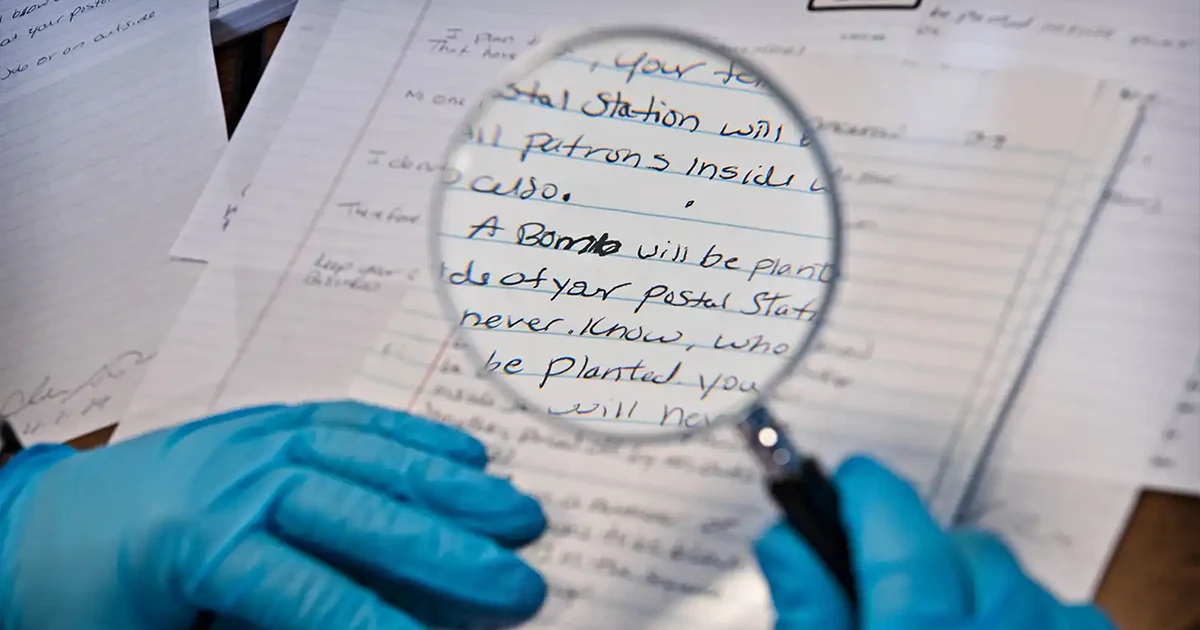
Handwriting is an important means of communication that reflects the individual. It is produced by the interaction between the brain and the motor reflexes of the hand. The calligraphic and individual characteristics of a person’s handwriting are as unique as fingerprints, and the parameters that shape them vary from one person to another. These differences provide important clues for determining who wrote the handwriting on a document.
How Calligraphic and Individual Characteristics Develop
The calligraphic and individual characteristics of a person’s handwriting are generally shaped by personal habits, educational background, physical traits and psychological state. Factors such as writing style, the way the pen is held, writing speed and the writing instruments used are among the defining elements of a personal writing style. For this reason, it is possible to identify and verify handwriting belonging to a particular individual.
In particular, to determine who wrote the handwriting on a questioned document, these calligraphic and individual characteristics are examined meticulously. By evaluating them in detail, forensic document examiners can reach clear conclusions about the identity of the writer.
🧠 It Is the Brain, Not the Hand, That Writes!
In forensic science, handwriting is often called “brain writing”. Even if you lost your hand and held the pen in your mouth, the characteristic curves and connecting points of your letters would not change. This is why handwriting is evidence as reliable as a fingerprint.
Personality Analysis vs. Forensic Document Examination
Handwriting-based personality analysis claims to infer a person’s character from their handwriting and signatures. Forensic document examiners, by contrast, analyse handwriting with a more scientific approach, using comparative and graphometric methods. In this process, the handwriting on questioned documents is compared in detail with reliable known handwriting samples.
These examinations take into account not only the calligraphic and individual characteristics of the handwriting but also writing style, letter size, slant, spacing and overall structure. On the basis of these data, examiners provide scientifically grounded opinions on the authorship of the handwriting.
Handwriting and Signature Examinations
Handwriting and signature examinations are of great importance in legal proceedings. In fraud and forgery cases in particular, detecting forged signatures or handwriting plays a critical role in protecting the rights of victims. With their ability to detect even small differences in handwriting, forensic document examiners can uncover this kind of forgery.
Examining the handwriting on forged documents not only establishes who wrote it but also provides important information about the reliability and validity of the documents. Especially in official documents and contracts, the authenticity of the handwriting is a decisive factor in resolving disputes between the parties.
🔬 4 Critical Clues Under the Microscope
- ✅ Pen Pressure (Indentation): The embossed trace on the back of the paper.
- ✅ Initial and Terminal Hooks: The moment the pen first touches the paper.
- ✅ Baseline Alignment: How the writing moves along the imaginary line.
- ✅ Dotting Habits: The way the dot on the letter “i” is placed.
Conclusion
In conclusion, handwriting and signatures play a critical role in verifying individuals’ identities and ensuring the reliability of documents. The calligraphic and individual characteristics of handwriting are not merely a writing style; they are important data that reflect a person’s identity. The examination of these features by forensic document examiners contributes to the rule of law and to justice being done. Seeking professional support when necessary is an important step in protecting individuals’ rights in written documents and preventing loss of rights. Forensic document examination remains an important element in ensuring security and justice in society.