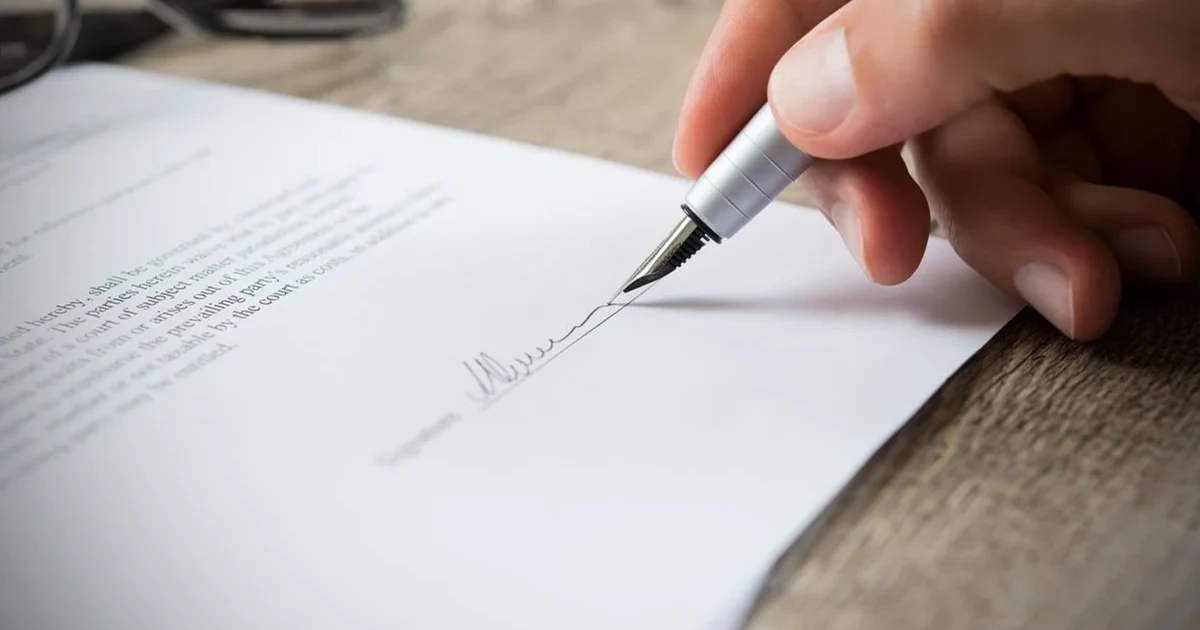
A wet ink signature is a physical mark that a person places at the bottom of a document in their own hand and of their own free will, using a pen or similar writing instrument, and which carries biometric characteristics. As the core element of the “written form requirement” in the Turkish legal system, the wet ink signature has for centuries been regarded as the gold standard for identity verification, declaration of consent and the legal validity of a document.
However widespread digitalisation has become, under the Turkish Code of Obligations and the Code of Civil Procedure (HMK) , a wet ink signature is still mandatory for the most critical transactions, from promissory notes (senet) and land registry transfers to inheritance agreements and bank instructions. This is because a wet ink signature is not merely a trace of ink; it is a reflection of the writer’s neuromuscular (nerve and muscle) system on paper.
FORENSIC AND CHARACTERISTIC FEATURES OF A WET INK SIGNATURE
The features that make a signature “wet ink” and “impossible to copy” are precisely the details forensic document examiners look for in the laboratory:
1. Biometric and Individual Identity (Fingerprint Quality) A wet ink signature is shaped by the writer’s state of mind at that moment, the structure of the hand muscles and reflexes acquired over the years. Every signature carries the following forensic details unique to its owner:
- Pen Pressure (Indentation): The degree of pressure the pen applies to the paper.
- Speed and Acceleration: The fluency of the signature from start to finish.
- Slant and Direction: Whether the letters lean to the right or to the left.
- Writing Habits: Personal hooks, dots and terminal strokes.
FORENSIC EXAMINER’S TIP: WHY A BLUE PEN?
Why is a blue ballpoint pen particularly recommended for official documents? Because on black-and-white photocopies it is hard to tell at first glance whether a signature made in black ink is wet ink (original). A blue pen is the most practical way to demonstrate that a document is the original.
2. Legal Binding Force and Validity In the Turkish legal system, for a contract or promissory note to be valid, the signature on it must be “handwritten” (secure electronic signatures excepted). A wet ink signature legally confirms that the person has read the document, understood it and accepted its content. In court it is the hardest type of evidence to deny and has the highest probative value.
RISKS AND FORGERY METHODS FOR WET INK SIGNATURES
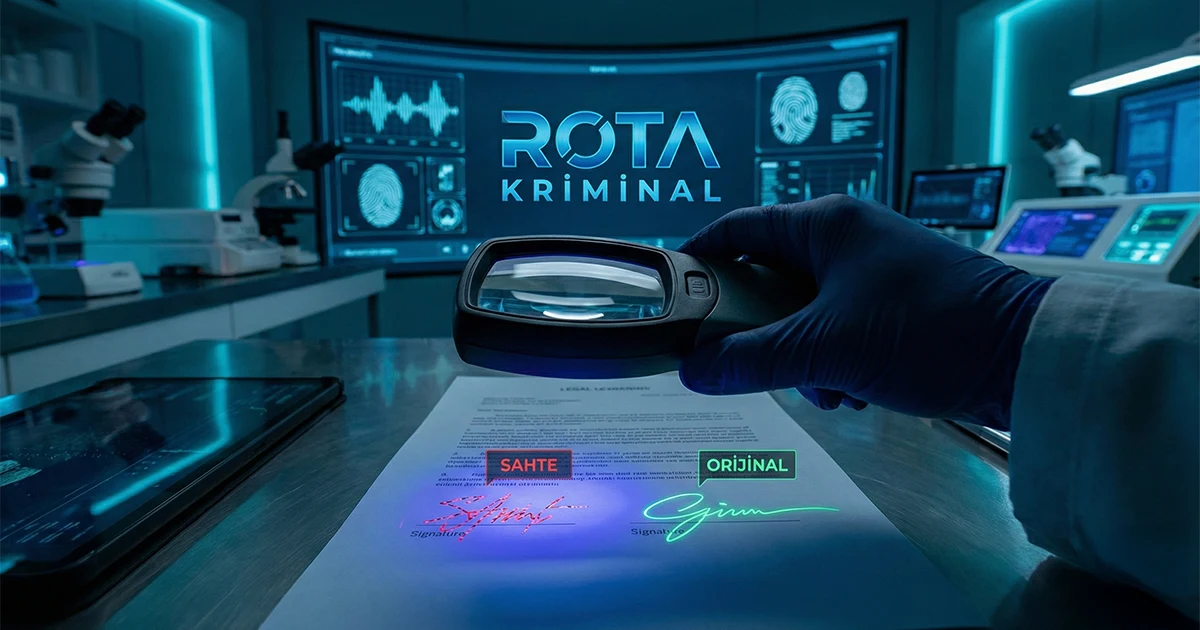
The greatest risk to a wet ink signature is that people acting in bad faith try to imitate it. To a trained eye, however, there is no such thing as a perfect imitation. Forgery is usually carried out using the following methods, which our examiners detect:
- Freehand Simulation: The forger tries to copy a signature while looking at it. (It usually gives itself away through slow, shaky lines.)
- Tracing: The outline of the signature is transferred using a light box or carbon paper.
- Montage: A genuine signature from another document is transferred to the new document by digital means.
DIFFERENCES BETWEEN A WET INK SIGNATURE AND AN ELECTRONIC SIGNATURE (E-SIGNATURE)
Although the e-signature, which entered our lives with advances in technology, is often confused with the traditional wet ink signature, the two are entirely different both structurally and forensically:
1. Structural Characteristics:
- Wet Ink Signature: Reflects the person’s biological and physical characteristics (pressure, speed).
- E-Signature: A mathematical algorithm and cryptographic key.
2. Verification Method:
- Wet Ink Signature: Verified in a forensic laboratory through signature examination and microscopy.
- E-Signature: Verified through digital certificate providers and software.
3. Area of Use:
- Wet Ink Signature: Mandatory for vital documents such as promissory notes, cheques, title deeds, certificates of inheritance and marriage.
- E-Signature: Common in e-Government (e-Devlet), corporate correspondence and banking transactions.
WET INK SIGNATURE
Nature: Biological and Physical
Evidence: Pressure and handwriting analysis
Use: Promissory Notes, Cheques, Title Deeds
E-SIGNATURE
Nature: Numerical and Digital
Evidence: Encryption algorithms
Use: UYAP (Turkish judicial IT system), Banking
AREAS WHERE THE WET INK SIGNATURE REMAINS INDISPENSABLE
Despite digitalisation, a wet ink signature is still mandatory in areas where legal certainty must be maintained at the highest level:
- Official Documents and Negotiable Instruments: Passport applications, civil registry procedures, and the issuing of promissory notes and cheques.
- Real Estate and Inheritance Law: Land registry transfers, wills and estate distribution agreements.
- Commercial Contracts: Company formations, high-value contracts under the law of obligations and lease agreements.
- Financial Instructions: Over-the-counter bank transactions and large loan agreements.
THE GOLD STANDARD IN DOCUMENT SECURITY
A wet ink signature is not just a formality; it is the strongest evidence determining the legal fate of a document. Although electronic signatures offer speed and convenience, the wet ink signature is still the method that most tangibly reflects a person’s will and provides “undeniable” findings in forensic examinations.
For this reason, every wet ink signature you make is a commitment that binds you legally. To make your signature harder to imitate, choosing a complex signature style that contains your first name and surname and has distinctive features is vital for your personal document security.
IS THE SIGNATURE ON THE DOCUMENT REALLY YOURS?
Visual checks can be misleading. We establish the facts scientifically through microscopic examination and pen pressure analysis.
REQUEST AN EXPERT OPINION