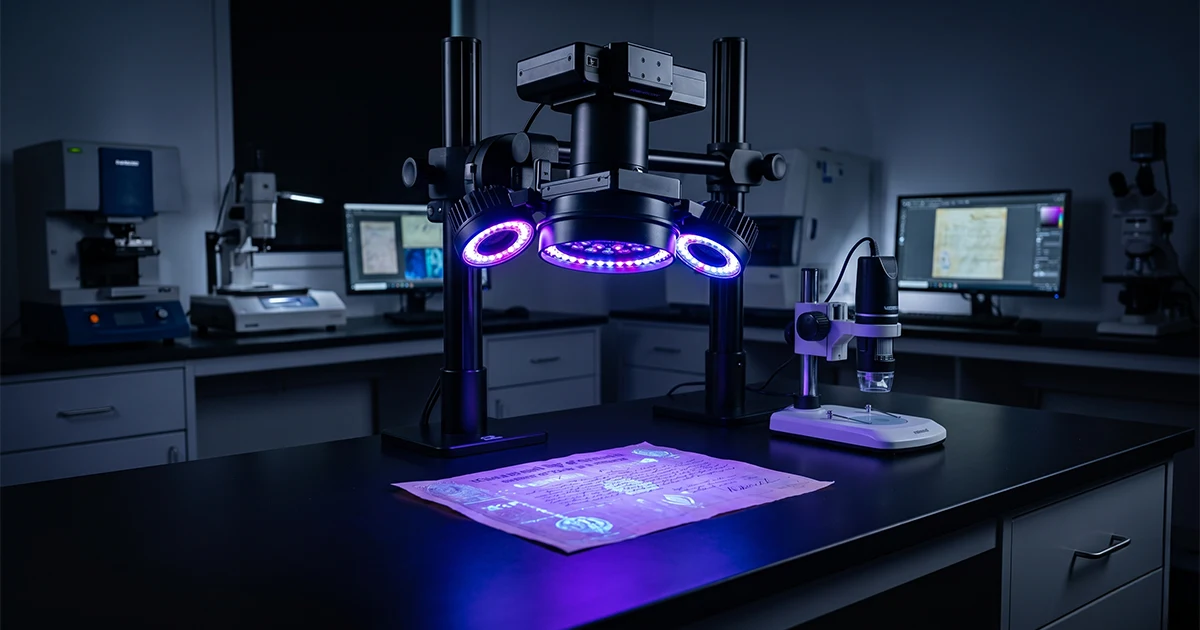
The Role of Technology and Digital Analysis in Forensic Document Examination
Forensic document examination is not merely a simple process of observation with the naked eye. Today, document forgery methods have become highly sophisticated, and alterations made to documents are often too well concealed to be noticed at first glance.
To reveal erasures, later additions, copied forged signatures or ink differences on a document with conclusive evidence, the use of advanced technical equipment in a forensic laboratory is essential. These modern instruments make it possible to analyse micro-details the naked eye cannot perceive, and every kind of interference with the document is presented to the judicial authorities in scientific, measurable reports.
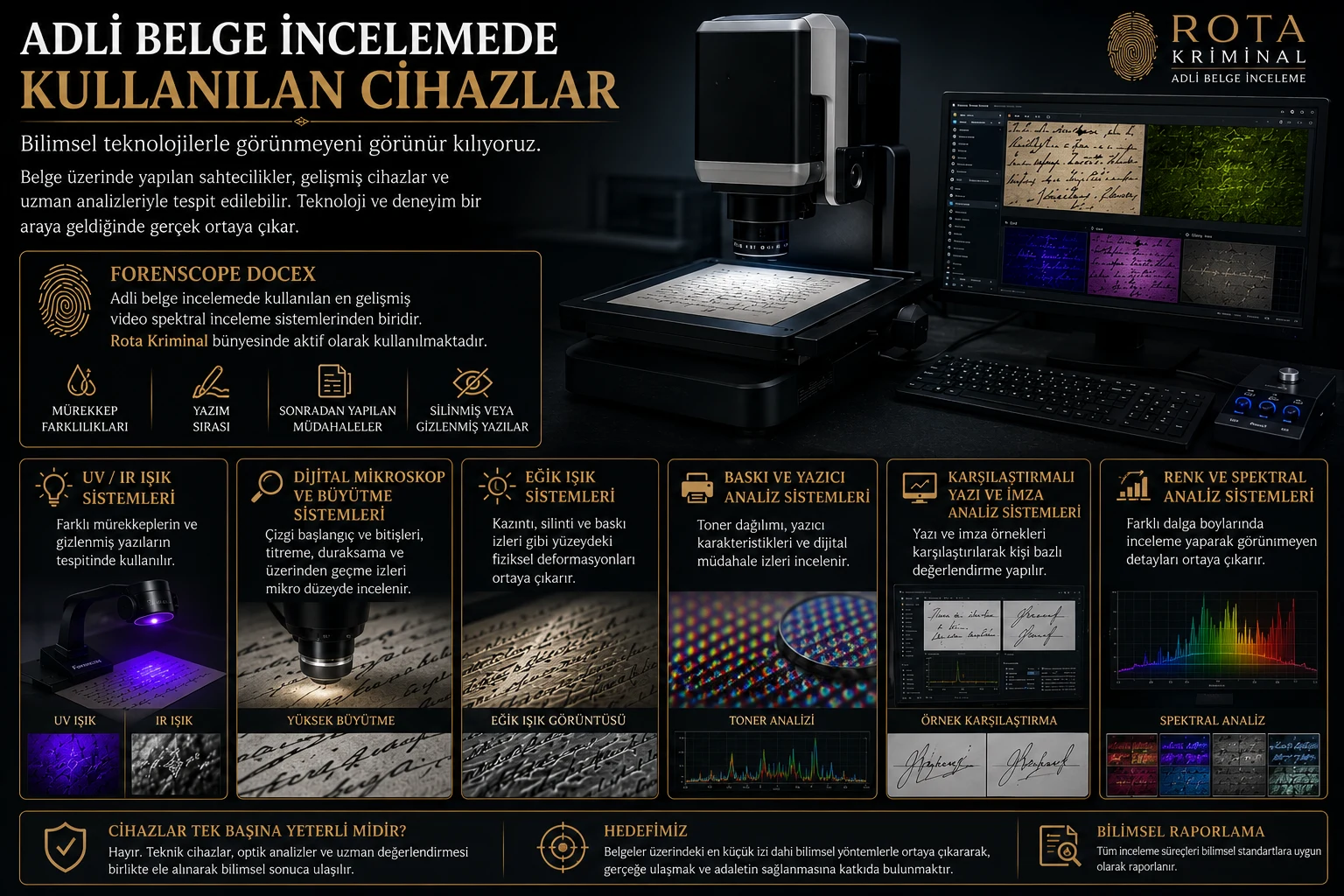
The following situations requiring forensic detection in particular can only be revealed with optical and digital analysis systems:
- Added Text: Text additions that compromise the original integrity of the document.
- Erasures and Scrapings: Detection of data removed by mechanical or chemical means.
- Use of Different Inks: Spectral differentiation of inks that appear to be the same colour but differ in chemical composition.
- Simulated and Forged Signatures: Differences in pen pressure (indentation), speed and stroke direction.
- Digital Manipulation: Montage documents produced using photocopiers, scanners or printers.
For this reason, the use of technological infrastructure and scientific methods in the steps of forensic document examination is of great importance for legal proceedings to progress transparently and accurately.
High-Precision Video Spectral Examination with Forenscope DocEx
One of the most advanced technologies used in forensic document examination, Forenscope DocEx is a sophisticated video spectral examination system that allows micro-details on questioned documents to be analysed with high precision.
This professional technology, available to only a limited number of laboratories across Turkey, is actively used in the Rota Kriminal laboratories and plays a critical role in solving the most complex document forgery cases.
Thanks to this superior equipment, the following forensic elements, which cannot be detected with the naked eye or standard methods, can be reported with conclusive evidence:
- Ink Differences: Spectral analysis of inks that look identical but differ in chemical composition.
- Line Density and Pressure (Indentation): Microscopic pressure traces in signatures and writing.
- Determining the Sequence of Strokes: Establishing which writing or signature was placed on the document first where lines intersect.
- Subsequent Interference: Any alterations and additions made after the document was in its original state.
- Erased or Concealed Writing: Bringing to light text that someone has tried to remove by chemical or mechanical scraping.
Conclusive Detection with UV and IR (Ultraviolet / Infrared) Analysis
One of the key features that makes the Forenscope DocEx system unique in forensic document examination is its ability to examine documents under different light spectra and wavelengths. Documents that appear uniform in colour and texture to the naked eye reveal their true nature under special light sources.
The main optical examination methods applied in our laboratory in this context are:
UV (Ultraviolet) Examination Inks with different chemical components produce completely different fluorescent reactions under UV light. Thanks to this optical reaction:
- Added Text: Later additions with a different ink composition are detected, even if written with a pen of the same colour as the original text.
- Use of Different Pens: It is determined whether the document was filled in at different times or by different people.
- Invisible Details: Invisible traces that have been washed, erased or exposed to chemical treatment are revealed.
IR (Infrared) Examination In the infrared band (IR absorption / IR luminescence), some inks become completely transparent and disappear, while others remain clearly visible or glow. This high-tech method:
- Concealed and Obliterated Writing: Makes it possible to read original text that has been rendered illegible by scribbling over it with another pen.
- Erased Areas: Captures the microscopic traces left in the paper fibres by writing removed by scraping or chemical means.
- Interference with the Document: Provides the most important data for reporting, scientifically and incontestably, any alteration that compromises the integrity of the document.
Micro-Analysis with Digital Microscopes and Magnification Systems
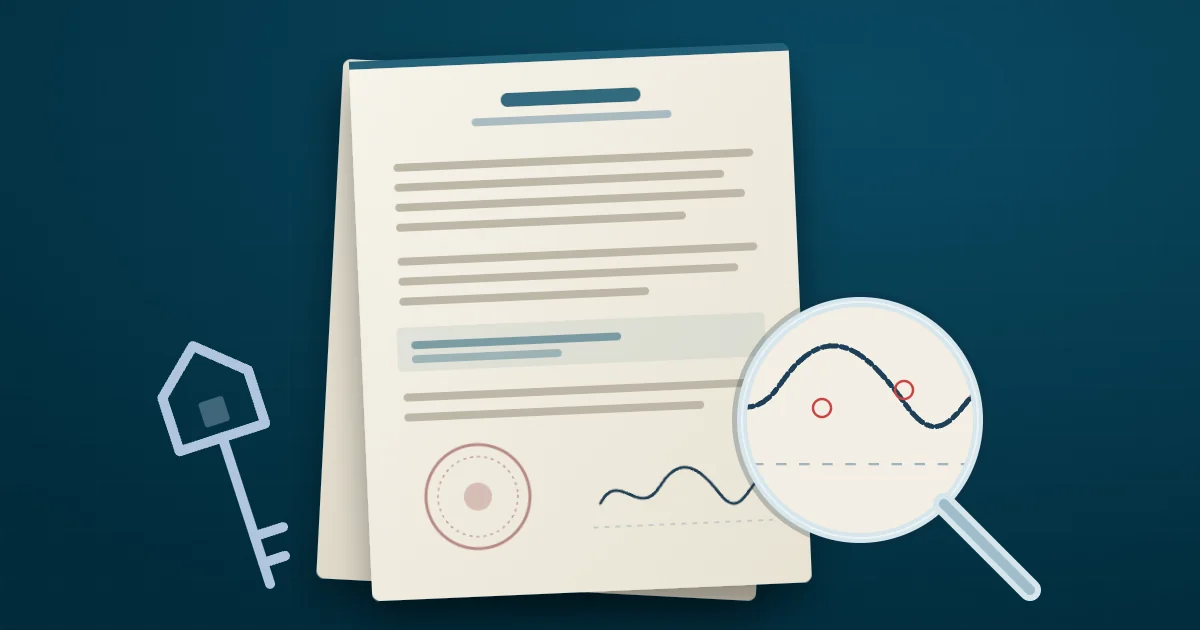
Another critical technology used in forensic document examination is digital microscope systems offering high-resolution magnification. Where the naked eye is insufficient to detect forged documents and simulated signatures, the questioned material is placed under the lens at micro level.
With advanced digital microscopes, the following forensic details on a document can be examined to the millimetre:
- Stroke Beginnings and Endings: Characteristic traces and tapering at the points where the pen first touches and leaves the paper.
- Tremor and Hesitation: Unnatural interruptions and hesitation pauses caused by the act of copying in simulated signatures.
- Retouching (Overwriting) Traces: Later interventions made to cover up defects in the lines or make them look similar.
- Pressure (Indentation) Differences: Analysis of the depth and intensity of the force applied to the paper when writing or signing.
Particularly in signature examinations and handwriting analyses, scientific assessment of pen and line behaviour in this way is vital for proving forgery.
Surface Analysis with Oblique Light Systems
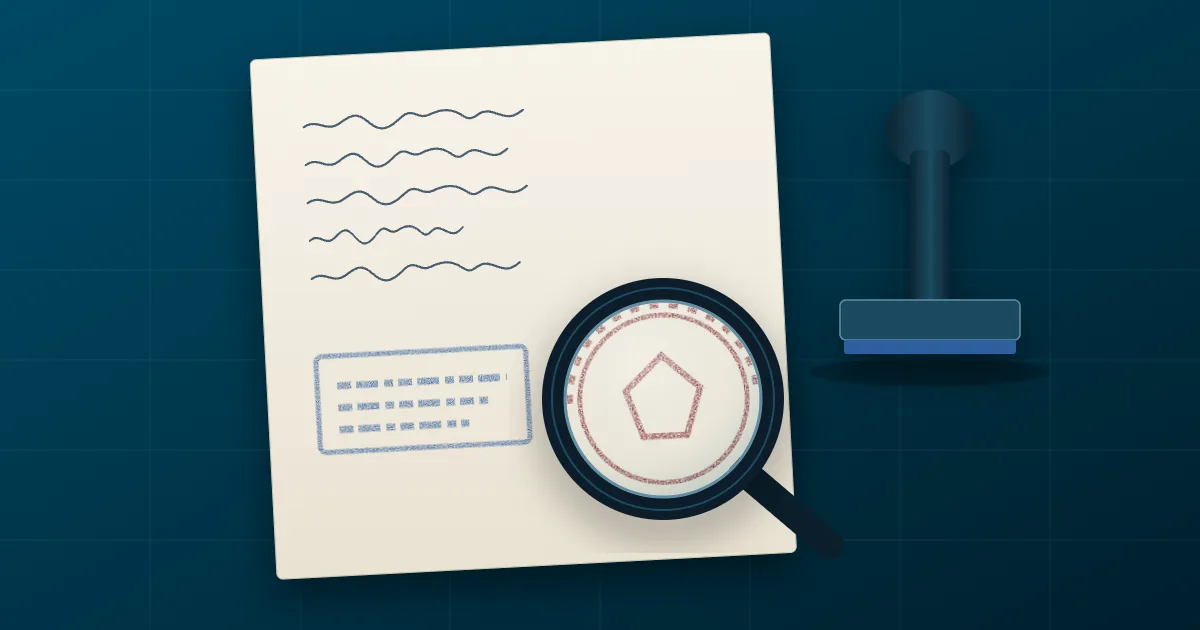
Forensic document examination laboratories use oblique light systems to reveal invisible physical deformations on the surface of the paper. The method is based on directing the light source onto the document surface at a very narrow (almost horizontal) angle. In this way, the slightest indentations and protrusions on the surface are thrown into shadow and become visible like a three-dimensional map.
Oblique light analysis allows the following physical interventions that compromise the integrity of a document to be detected beyond doubt:
- Indented Impressions: Microscopic pressure traces transferred to the sheet below from writing or a signature made on the sheet above.
- Erasure Areas: Surface abrasion caused by an eraser or similar mechanical tool that disturbs the sheen or texture of the paper.
- Scrapings: Letters or figures scraped from the paper surface with sharp tools such as a scalpel, razor blade or needle.
- Damage to the Paper Fibre Structure: Wear and deformation in the paper fibres caused by any physical or chemical interference with the original texture of the document.
Detecting Digital Forgery with Print and Printer Analysis Systems
In the growing number of digital forgery cases, print and printer analysis systems are used to detect forged documents produced with photocopiers, scanners, laser or inkjet printers. Such professionally assembled documents, indistinguishable from the original to the naked eye, are examined at microscopic scale in the laboratory, and their production methods and device characteristics are deciphered.
These advanced analysis systems allow the following elements on a document to be examined conclusively:
- Toner and Ink Distribution: The characteristic spread patterns on paper of toner particles from laser printers or micro-droplets from inkjet devices.
- Printer Characteristics (Tracking Dots): Invisible machine identification codes left on the paper by modern colour printers, revealing the make, model and serial number of the device.
- Print Layers and Sequence: Determining, through intersection analysis, whether the wet ink signature was made before or after the printout.
- Traces of Digital Manipulation: Pixel- and halftone-based manipulations made to the document through photocopy tricks, montages or computer software (Photoshop, etc.).
Critical sequence determinations, such as whether a document was printed after the wet ink signature was made or whether the signature was placed on a blank printout, can be made in the laboratory. For documents suspected of being photocopy or digital montages, you can request a scientific analysis of printer and print characteristics.
Is Equipment Alone Enough? The Critical Role of Expertise
However advanced the technology used in forensic document examination, laboratory equipment is not a decision-maker in its own right. So, is equipment worth millions of Turkish lira and top-level forensic instruments enough on its own to reveal the truth? Certainly not.
For complex spectral data, microscopic findings and digital analysis results to become legal evidence, the knowledge, methodology and experience of a forensic document examiner are essential. To eliminate misleading findings, identify exceptions and reach the correct conclusion, the forensic examination process is conducted as a whole:
- Technical and Optical Analyses: Scanning the document with advanced equipment and revealing hidden data invisible to the naked eye.
- Comparative Examinations: Systematic, scientific comparison of the questioned material with the person’s genuine samples (reference documents).
- Expert Assessment: Interpreting all technical findings according to forensic science principles and turning them into a scientific, impartial expert opinion (report) that can be submitted in court.
In short, technology makes the invisible visible, but only an expert eye can determine what that trace means in legal terms.
Technology and Expertise
The complex optical data produced by equipment only becomes evidence when it is interpreted correctly. At Rota Kriminal, we evaluate all our laboratory findings according to international forensic science standards and prepare expert opinions that can be submitted as evidence in court.
Reliable Answers Through Technology and Expertise
The high-tech equipment used in forensic document examination sheds light on invisible details on documents and is the greatest support of the scientific examination process. In particular, thanks to advanced multispectral systems such as Forenscope DocEx, ink differences, line structures, later interventions and concealed details that cannot be seen with the naked eye are deciphered with high precision in the laboratory.
It should not be forgotten, however, that the foundation of a reliable forensic document examination process is not technology alone, but the expert assessment that correctly interprets the data obtained with that technology and an impartial scientific approach. The combination of advanced equipment and forensic science expertise provides the most solid basis for justice to be done.
Frequently Asked Questions
Is equipment alone enough in forensic document examination?
No. Forensic document examination is not just a matter of using equipment. Expertise and experience are needed to interpret the technical data obtained correctly. Technical equipment, optical analyses and comparative examinations are carried out together with expert assessment.