A Hard-to-Detect Signature Forgery Method, “Freehand Simulation”: A Case Report
A Hard-to-Detect Signature Forgery Method “Freehand Simulation”: Case Report
Authors: Güven Seçkin Kırcı¹, Halil İlhan Aydoğdu¹, Hasan Okumuş¹, Erdal Özer¹’², Ahmet Eryılmaz⁴, İsmail Birincioğlu³
¹Karadeniz Technical University (KTÜ) Faculty of Medicine, Department of Forensic Medicine; ²KTÜ Institute of Forensic Sciences; ³Balıkesir University Faculty of Medicine, Department of Forensic Medicine; ⁴Okmeydanı Training and Research Hospital
Abstract
A signature is defined as the name given to any kind of mark, as well as a person’s own handwriting, that conclusively identifies the signer and expresses their intention to approve the document on which it is placed. Forged signatures – those not made by the person themselves, i.e. not the product of their own hand – are produced using various methods. These can be listed as tracing, simulation by copying from a model, signatures made by freehand simulation, removing stamps bearing a signature and transferring them to other documents, signatures produced with computer and photocopying technology, and fabricated signatures made in the names of fictitious persons. To these can be added signatures made with signing machines, which have been invented recently and which we encounter with increasing frequency.
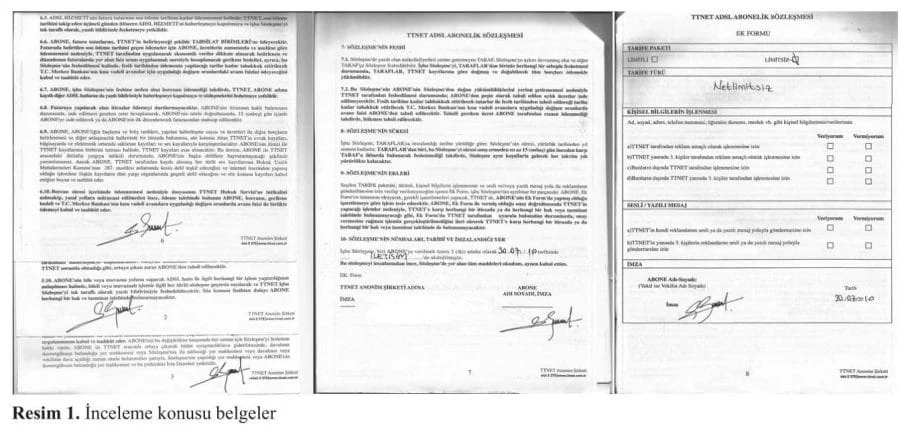
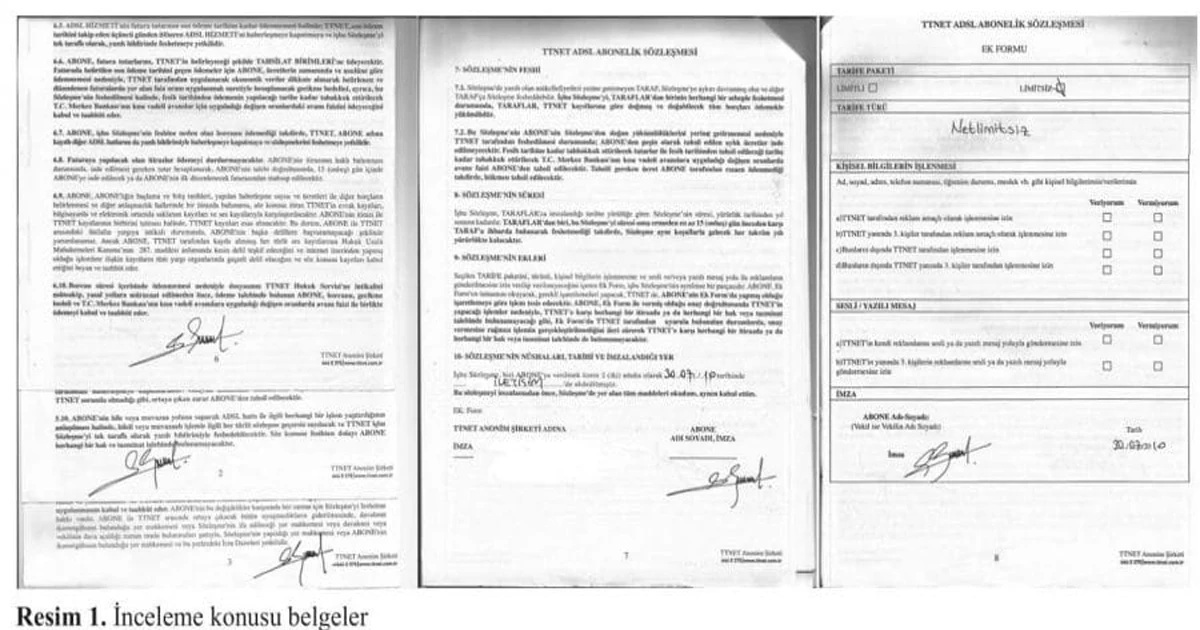
Figure 1: The questioned documents that are the subject of the case report.
Among the methods listed, signature forgery carried out by the “Freehand Simulation Method” differs from the others in certain respects. In signatures made by freehand simulation, the forger practises the signature carefully for days, making trial attempts, memorises it in every respect and, once convinced that they can produce an imitation, signs it in one continuous movement.
⚠️ The Forger’s Advantage: The “Memorised Signature”
Because the forger has the opportunity to practise many times, it is by no means unlikely that a signature model emerges which closely resembles the original and is difficult to detect. For these reasons, the differences may remain hidden in the details. In many respects, this method is the type of forgery that is the most difficult for examiners to uncover.
When we look at the questioned signature in our case and the comparison signatures, we see that they share similar features in terms of many diagnostic elements, including speed, fluency, arrangement, slant and degree of pen pressure.
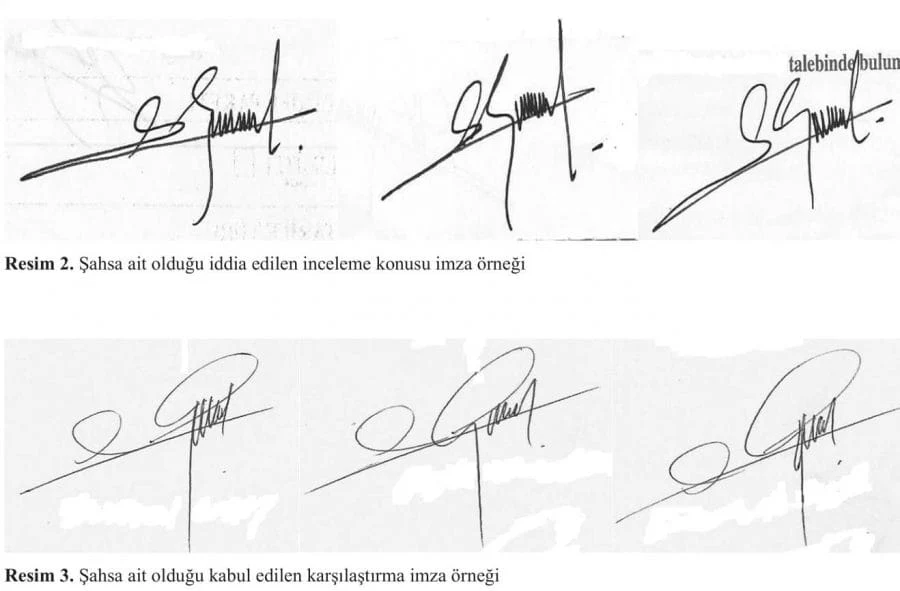
Figure 2: Analysis of the characteristic differences between the original and forged signatures.
However, when the signatures are examined in more detail, it becomes clear that there are significant differences, particularly at the starting and ending points, in the structure and number of connecting strokes, in the vertically ascending and descending strokes of the signatures, and in their loops and curves. Evaluated in these respects, it was concluded that the signatures in our case had been made using the freehand simulation method.
🛡️ Conclusion and Recommendation
This study aimed to present a relatively hard-to-detect case of signature forgery with sample images, and to emphasise the need for caution in this area and the importance of obtaining an experienced expert opinion.
🔗 Click Here for the Original Article (Adli Tıp Bülteni Archive)