Today, documents are mostly prepared and printed using computer printers and photocopiers. However, alterations or forgeries made on these documents cause serious problems in legal proceedings. Forensic document examiners use advanced instruments and optical equipment to detect such interventions. In addition, traces such as the make and serial number of the devices used to produce the documents can be analysed to provide important information. This article looks in detail at the examination of documents produced on computer printers, the detection of alterations and the identification of traces left by the devices used.
1. Types of Alteration in Documents Produced on Computer Printers
Alterations to documents printed on computer printers can be made in various ways. The most common types of alteration are:
- Erasure: Changes are made by scraping off or erasing the ink or toner layer in certain parts of the document.
- Scraping: An attempt is made to change the text by physically interfering with the writing. Such scraping can be revealed through microscopic examination.
- Additions: Changes are made by adding new text to the original document. This can be detected by examining structural differences in the ink or toner within the same document.
Each type of alteration can be analysed with specific techniques and instruments to determine whether a document is forged.
🕵️♂️ The Invisible Fingerprint: Yellow Dot (MIC) Technology
A sheet of paper that looks white to the naked eye may in fact carry thousands of hidden codes. Colour laser printers print microscopic yellow dots (Machine Identification Code) on their output. By analysing these dots in our laboratory, we can determine which printer the document came from, and on what date and at what time it was printed.
2. Forensic Document Examination Methods
2.1. Optical Examination Techniques

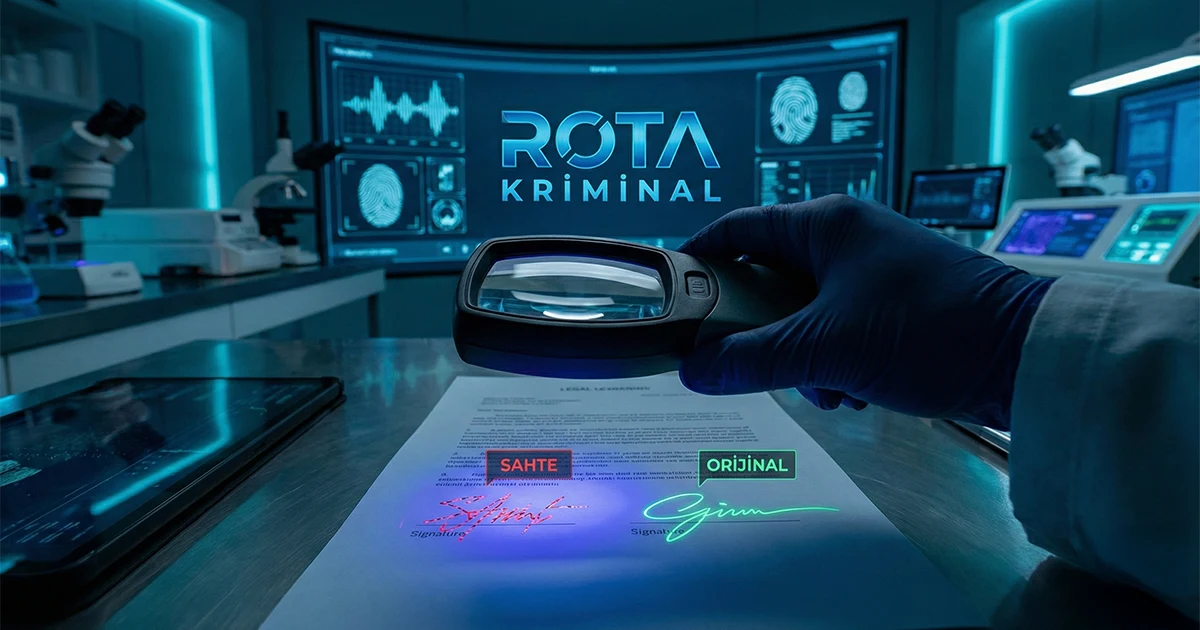
Optical examination involves analysing the physical structure of documents under magnification. Microscopes and magnifiers are used to detect alterations such as erasures and scraping. In addition, examining documents under UV (ultraviolet) and IR (infrared) light can reveal ink differences and areas where additions have been made.
2.2. Spectroscopic Analysis
Spectroscopic methods are used to analyse the components of the ink or toner used on a document. This method reveals alteration where more than one type of ink has been used on a document. It also makes it possible to identify differences between printing technologies (such as laser and inkjet printers).
2.3. Analysis of Printer Traces
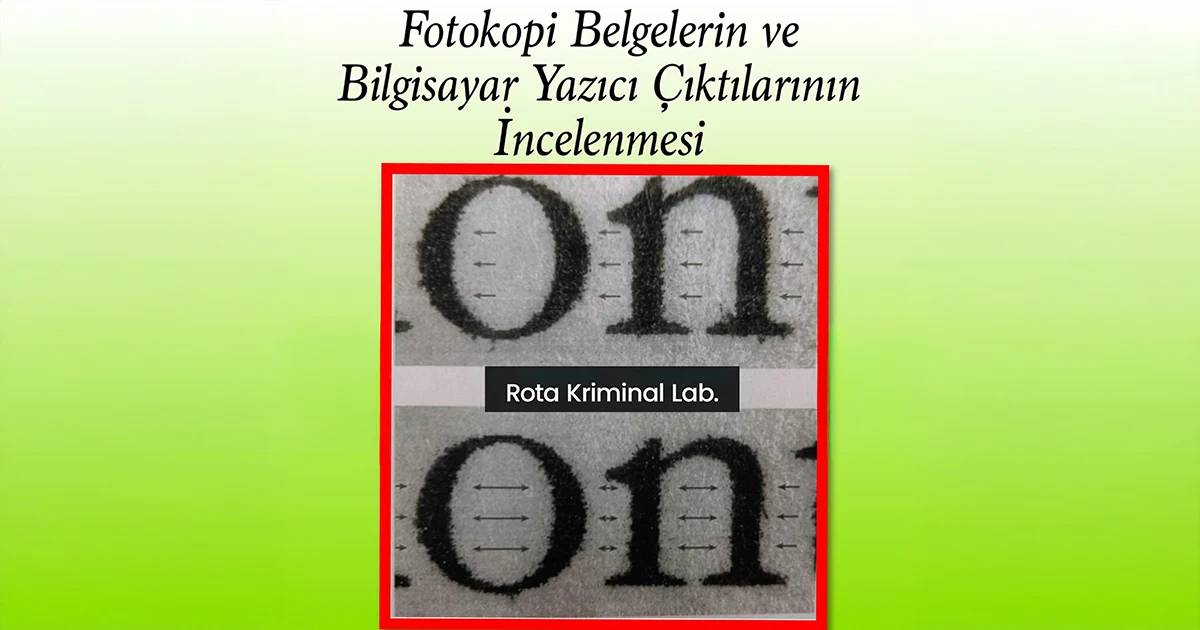
Every printer has its own characteristic traces. Mechanisms such as the toner, print head or drum leave particular patterns or micro-traces on printouts. These traces provide information about the make and model of the printer. When examined under magnification, the distinguishing traces of the printer can be identified.
3. Determining How a Document Was Produced
Documents produced by computer printers may carry various traces of the device. Modern printers and photocopiers leave a kind of “fingerprint” on every document they produce. This fingerprint contains production information about the device. The following information can be determined:
- Device Make and Model: Every printer or photocopier leaves certain patterns or designs on its output.
- Serial Number: Some printers place microscopic dots containing the device’s serial number on their output (dot-pattern technology). This makes it possible to find out which device produced the document.
- Date and Time of Production: The year, month, day and time a printout was made can be determined using the device’s memory traces or printer logs.
This data is particularly valuable as evidence in cases of forgery or fraud.
🔍 Possible Interventions on a Document
Removal of text by mechanical or chemical means. Detected from fibre disturbance.
Text added later. Caught through differences in ink or toner and in the writing sequence.
Digital combination of different documents. Found through pixel errors.
4. Examining Alterations in Legal Proceedings
Forensic document examination is important for uncovering forgery and alteration offences. Manipulations made on documents can be detected by experts and submitted as evidence in legal proceedings. Expert reports play a critical role in the courts and help to resolve doubts about the authenticity of a document. The methods and instruments used in forensic document examination include:
- High-Resolution Microscopes: Allow detailed examination by magnifying traces of alteration.
- UV and IR Cameras: Identify differences in ink or toner.
- Forensic Software Solutions: Analyse a device’s print traces and serial numbers.
🔬 VSC Sees What the Eye Cannot
With our Video Spectral Comparator (VSC) instruments, we separate the different inks on a document under infrared (IR) and ultraviolet (UV) light. Even if they appear to be the same black, inks with different chemical compositions glow in different colours on our screen and reveal the forgery.
5. Case Examples Involving Printed and Photocopied Documents
Forensic document examination methods have been used in many forgery cases. For example, printer traces are of great importance in detecting forged cheques or identity documents. In cases of unlawful copying of confidential documents, information on which device produced the document and when it was prepared plays a critical role in resolving the case. Thanks to such analyses, attempted forgeries are uncovered and a contribution is made to the administration of justice.
Alterations to documents produced on computer printers and photocopiers can cause serious problems in legal proceedings. However, advanced document examination instruments and optical methods make it possible to detect such alterations. Information such as which device produced a document and when can also be analysed. Forensic document examiners use these technologies to establish the authenticity of documents and help uncover forgery offences. Such analyses ensure that reliable evidence is presented in legal proceedings and help justice to be done.
DO YOU DOUBT A DOCUMENT’S AUTHENTICITY?
We uncover the truth through printer trace and toner analysis.
REQUEST AN EXAMINATION